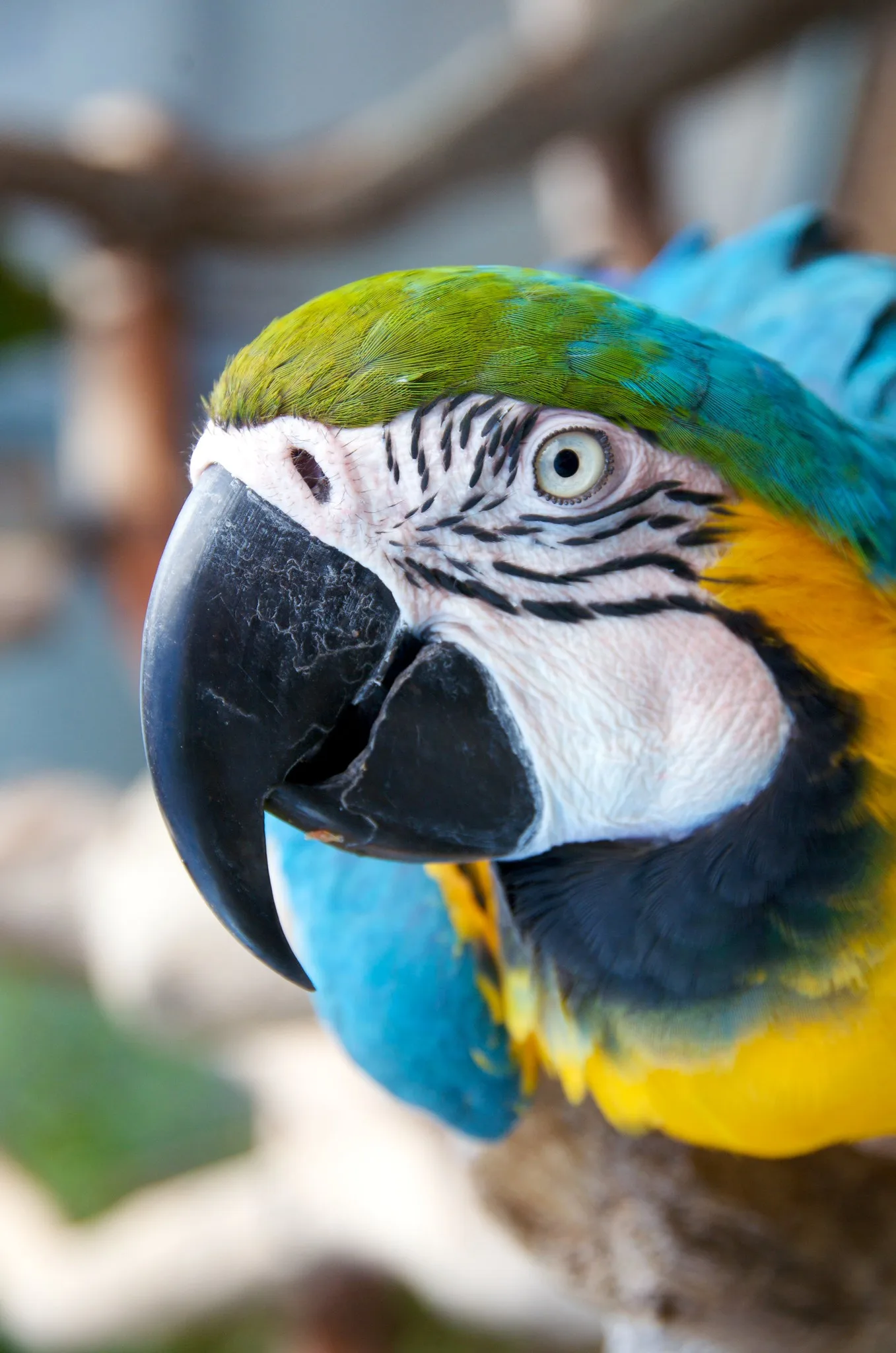
Parrots are among the most colorful and characterful birds on Earth. Brilliant macaws, playful cockatoos, chattering parakeets and gentle lovebirds dazzle with feathers in every shade of red, blue, green and gold, and their expressive eyes and curious personalities make them wonderful portrait subjects. Whether you photograph wild parrots on a tropical trip, birds in a zoo aviary or a beloved pet at home, parrot photography rewards patience with some of the most vivid pictures in nature.
This beginner guide covers why parrots are rewarding subjects, where to find them, sharp eyes and close portraits, color and exposure, backgrounds, light, behavior and personality, flight, aviaries and wildlife parks, wild parrots, pet parrots at home, settings, phones, editing, ethics, common mistakes and a short practice exercise. It builds on the guides to bird photography and zoo and aquarium photography.
Why parrots are rewarding subjects
- Color. Bold plumage makes instantly eye catching pictures.
- Expression. Parrots tilt heads, raise crests and watch you with bright eyes.
- Personality. Playful, social and curious behavior creates story moments.
- Detail. Feather patterns, curved beaks and textured feet reward close looking.
- Accessibility. Zoos, bird parks and pet owners offer close encounters.
Parrots often stay still on a perch for long periods, which gives beginners time to compose, while their sudden bursts of activity test reflexes and timing.
Kinds of parrots
- Macaws. Large, long tailed parrots with dramatic colors and bare facial patches.
- Cockatoos. White or pink parrots with expressive crests.
- Amazons and African grays. Medium parrots known for intelligence and talking.
- Parakeets and budgies. Small, social birds often seen in flocks.
- Lorikeets. Rainbow colored nectar feeders that are lively and bold.
- Lovebirds and conures. Small, bright parrots that often pair closely.
Each type behaves differently. Large macaws move slowly and deliberately, while lorikeets and parakeets dart and chatter constantly.
Thinking about the picture
Parrots are so colorful that it is easy to rely on color alone. The strongest parrot pictures add something more: an expression, a gesture, a relationship or a sense of place. Before shooting, ask what you find most interesting about the bird in front of you. It might be the intelligence in its eye, the comic angle of its head, the way two birds groom each other or the contrast of bright feathers against dark leaves. Choosing one idea helps you decide how close to get, where to stand and which moment to wait for.
Think also about variety. A set of parrot pictures might include a tight portrait, a full body view on a branch, a detail of feathers, an action moment and a wider view of the aviary or habitat. Together these tell a fuller story than many similar head shots.
Where to find parrots
- Zoos and bird parks. Aviaries and free flight shows offer close views.
- Tropical gardens. Some botanical gardens keep parrots among plants.
- Wild habitats. Rainforests, savannas and some cities host wild parrot flocks.
- Feral flocks. Some cities have escaped parrot colonies living in parks.
- Pet owners. Friends with pet birds may welcome a portrait session.
Choose places that care well for their birds. Avoid attractions where parrots are chained or forced to pose with tourists.
Visiting a bird park well
Bird parks and zoo aviaries are wonderful places to practice. Arrive at opening time, when birds are active and crowds are thin. Ask staff about feeding times and free flight shows, which bring birds close and give predictable flight paths. Spend a long time in one aviary rather than rushing through many, since birds settle and approach once you are still. Bring a lens cloth, as humid tropical houses can fog lenses when you first enter. Let the camera warm to the room for a few minutes before shooting.
Sharp eyes and close portraits
- Focus on the eye. Use single point focus or animal eye detection on the nearest eye. See the guide to eye detection autofocus.
- Catchlights. A small reflection brings the eye to life. See the guide to catchlights.
- Fill the frame. Head and shoulders portraits show feather detail.
- Profile views. Side views show the curve of the beak and eye clearly.
- Eye level. Get level with the bird for an intimate feel.
Parrot eyes are often pale and ringed with bare skin, which looks striking in sharp detail. Wait for the bird to turn its head toward the light.
Feather details
Up close, parrot feathers are full of hidden beauty. Look for the scaled pattern on a macaw’s face, the gradient from green to blue on a wing, the fine barbs on a tail feather and the rough texture of a beak and feet. A macro lens or a telephoto with close focus reveals these details. Soft, even light shows color best, while side light reveals texture. Fallen feathers in an aviary, photographed on a plain surface, also make lovely still life studies.
Color and exposure
- Watch reds. Bright reds and yellows can lose detail before the camera warns you. Check the color channels on the histogram.
- Reduce exposure slightly. Lower by a third to two thirds of a stop to protect saturated feathers.
- White birds. Cockatoos need careful exposure so feathers keep texture.
- Shoot RAW. RAW files hold more color detail for editing.
- White balance. Daylight or a custom setting keeps colors true.
The guide to color in photography explains how bold color affects a picture.
Composition ideas
- Space to look. Leave room in the direction the parrot faces.
- Diagonals. Branches and long tails crossing the frame add energy.
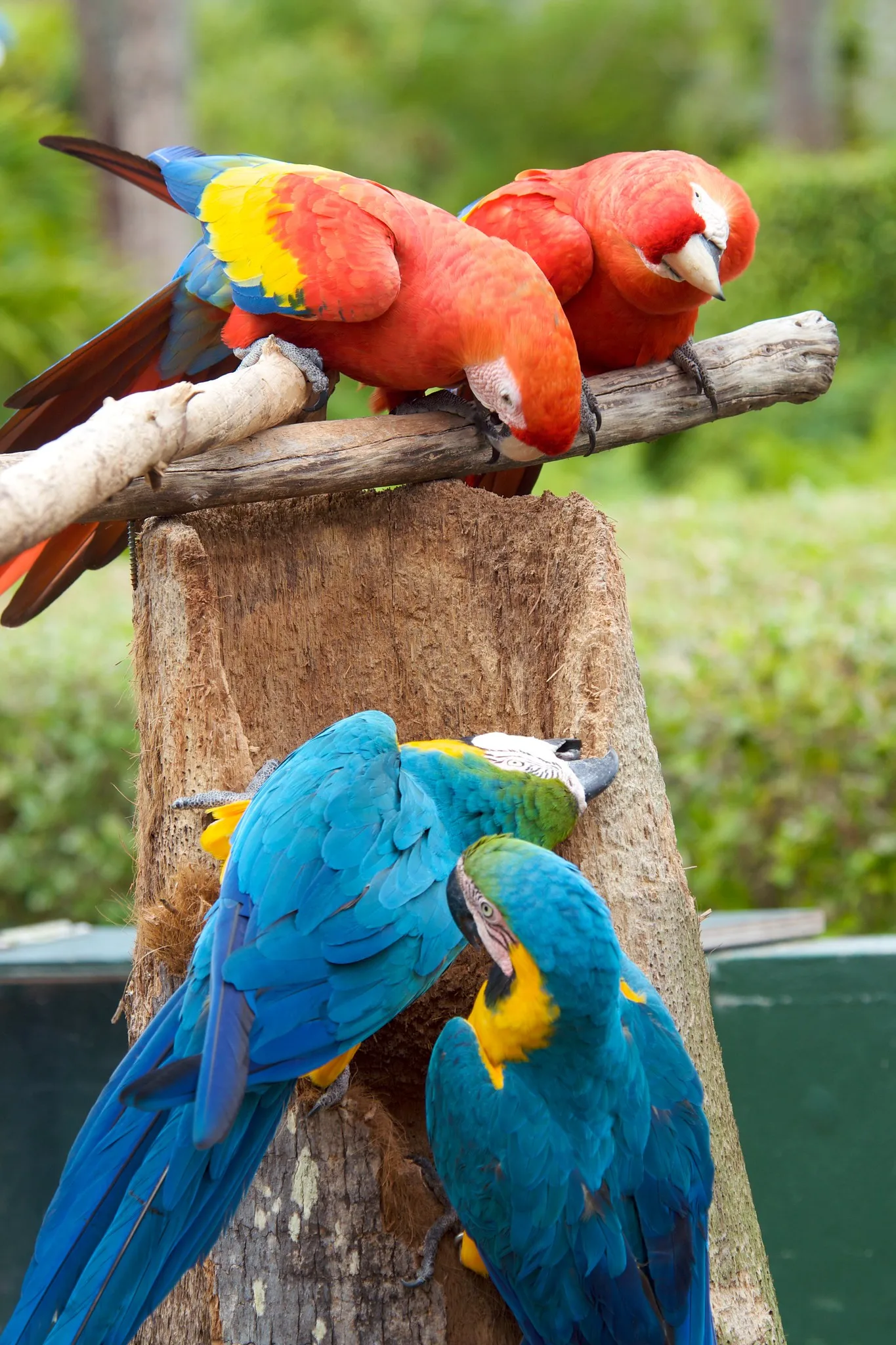
- Pairs. Two birds facing each other create balance and story.
- Vertical frames. Suit long tailed macaws on tall perches.
- Color contrast. Place red birds against green leaves for complementary color.
The guide to color theory explains how complementary colors make subjects stand out.
Backgrounds
- Green foliage. Soft green leaves complement red and blue parrots.
- Blue sky. Makes red and yellow parrots glow.
- Distance. Increase space between bird and background for more blur.
- Wide aperture. f/4 to f/5.6 softens busy enclosures.
- Clean edges. Avoid signs, wire and bright patches near the frame edge.
The guide to subject separation covers how to make a subject stand out.
Indoor tropical houses
Many bird parks keep parrots in warm glasshouses full of plants. Light here is often soft and diffused, which is lovely for color, but it can be dim. Raise ISO, use a wide aperture and keep shutter speeds fast enough to freeze small movements. Patches of direct sun through glass can create spotlights on a bird, which look dramatic if you expose for the bright feathers. Watch for distracting reflections and condensation on the glass roof behind the bird.
Light
- Open shade. Soft light shows true colors without harsh highlights.
- Morning and evening sun. Warm light makes feathers shimmer.
- Backlight. Light through wings and crests creates glowing edges.
- Window light. For pet parrots, a bright window gives soft, flattering light.
- Avoid harsh midday sun. It creates hot spots on bright feathers.
The guide to open shade explains why soft light suits colorful subjects.
Expressions to watch for
Parrots communicate with their bodies. Pinning eyes, where the pupil shrinks and expands quickly, show excitement or interest. Raised crests on cockatoos signal alertness or surprise. Fluffed feathers can mean contentment or a bird settling to rest. A head tilt suggests curiosity and makes a charming portrait. Learning these signals helps you anticipate moments worth capturing and know when a bird is stressed and needs space.
Behavior and personality
- Preening. Birds groom feathers, showing beautiful wing patterns.
- Interaction. Pairs touching beaks or sharing food show bonds.
- Squabbles. Raised wings and open beaks make lively action.
- Feeding. Holding food with a foot is a distinctive parrot behavior.
- Curiosity. Parrots often lean toward the camera with tilted heads.
Spend time watching a bird before shooting. Its habits soon become clear, and you can anticipate the next stretch, yawn or wing flap.
Parrots in flight
- Fast shutter. 1/2000 second or faster freezes wingbeats.
- Continuous focus. Track birds as they fly.
- Burst mode. Capture full wing spreads.
- Free flight shows. Bird parks often have shows where parrots fly predictable routes.
- Takeoffs. Watch for a bird crouching or leaning, which often signals takeoff.
Want to try other fast, colorful birds? The guide to hummingbird photography covers tiny birds and fast wings.
Aviaries, wild parrots and pets
- Through mesh. Put the lens close to the wire and use a wide aperture.
- Walk through aviaries. Birds become used to visitors and come close.
- Wild flocks. Clay licks, roosts and fruiting trees attract wild parrots at certain times.
- Pet sessions. Work with the owner, keep sessions short and let the bird stay on a favorite perch.
- Backgrounds at home. A plain wall or blanket behind a perch makes a simple studio.
For pet sessions, the guide to pet photography has more tips.
Wild parrots on travels
Seeing wild parrots is a highlight of many trips to tropical regions. Flocks often gather at dawn and dusk at roost trees, clay licks or fruiting trees, and local guides know the best spots and times. Bring a long lens, since wild birds are often high in the canopy, and be ready for harsh contrast between bright sky and dark leaves. Patience is key. Find a comfortable spot, stay still and let the birds come to you. Respect any rules at protected sites, which help keep these birds safe.
Parrots in black and white and creative styles
It may seem strange to remove color from such colorful birds, but black and white can reveal parrots in a fresh way. Without color, the eye notices feather patterns, the curve of the beak, the texture of bare facial skin and the intensity of the eye. High key portraits of white cockatoos against bright backgrounds look elegant, while low key portraits of dark parrots against black backgrounds look dramatic.
- High key. Bright, airy portraits with white backgrounds.
- Low key. Dark backgrounds with light falling only on the bird.
- Abstract feathers. Fill the frame with color and pattern alone.
- Motion blur. A slow shutter on flapping wings creates painterly streaks.
- Silhouettes. Parrot shapes against a sunset sky are instantly recognizable.
The guide to high key and low key photography explains these lighting styles.
Settings, phones and editing
- Portraits. f/4 to f/5.6, 1/500 second, auto ISO.
- Flight. 1/2000 second or faster, continuous focus.
- Lens. A 70 to 300mm or 100 to 400mm zoom suits zoos and parks.
- Focus. Eye detection or single point on the eye.
Using a phone
Phones work well for close parrots in walk through aviaries and pet portraits. Tap on the eye, lower exposure slightly for bright feathers and use portrait mode for soft backgrounds.
Editing parrot photos
Lower highlights and saturation slightly on reds and yellows if they lose texture. Brighten the eye and add gentle sharpening to feathers. Crop to remove distracting wire and keep colors natural.
Pet parrot portraits at home
Pet parrots make delightful portrait subjects because they are comfortable with people. Ask the owner to place the bird on a favorite perch near a bright window, with a plain wall or fabric behind. Sit at the bird’s eye level and let it get used to the camera before shooting. Treats and favorite toys can encourage interesting poses and expressions. Keep sessions short and stop if the bird seems stressed. Pictures of the bird interacting with its owner, such as perched on a shoulder or taking a treat, capture the special bond between people and their birds.
Sharing parrot pictures
When sharing, add a short caption naming the species and where the picture was made, including whether the bird was wild, in a park or a pet. Many parrot species are threatened in the wild by habitat loss and the illegal pet trade, and thoughtful captions can help raise awareness. Avoid sharing exact locations of wild nests or roosts, which can attract poachers.
Ethics and common mistakes
- No flash. Flash can startle birds.
- Respect wild birds. Keep distance at nests and roosts.
- Soft eyes. Always focus on the eye.
- Clipped colors. Watch reds and yellows.
- Busy backgrounds. Change angle for cleaner surroundings.
- Too long sessions. Keep pet sessions short and calm.
Patience with shy birds
Not every parrot is bold. Some hide behind leaves, turn their backs or fly to the far side of an aviary. Rather than following them, choose a spot with a good view of a favorite perch or feeding station and wait. Move slowly, avoid sudden gestures and keep your voice low. After a few minutes, many birds forget you are there and return to natural behavior, which almost always makes better pictures than a startled bird staring at the camera.
Try this: a 10-minute parrot study
At a bird park, zoo or with a pet parrot, make five pictures in ten minutes.
- A close portrait with a sharp eye and catchlight.
- A profile showing the beak.
- A wider view with perch and surroundings.
- A detail of feathers, feet or crest.
- An action moment: preening, stretching or flapping.
Frequently asked questions
How do I keep parrot colors from looking clipped?
Reduce exposure slightly and check the color histogram.
What lens is best for parrots?
A telephoto zoom for zoos and wild birds, a standard or macro lens for pets.
How do I photograph parrots through aviary mesh?
Put the lens close to the mesh, use a wide aperture and focus on the eye.
What shutter speed freezes parrots in flight?
1/2000 second or faster.
Can I use flash on parrots?
Avoid it. Flash can startle birds and reflect off mesh and glass. Raise ISO instead.
How do I photograph a pet parrot?
Use window light, a plain background and a familiar perch, and keep sessions short.
Why do my parrot photos look flat?
Harsh or dull light is the usual cause. Try open shade or warm morning light, and wait for a catchlight in the eye.
Curious about birds on the coast? The guide to seabird photography covers gulls, puffins and cliffs.
For terms such as catchlight, eye detection and histogram, see the photography glossary.