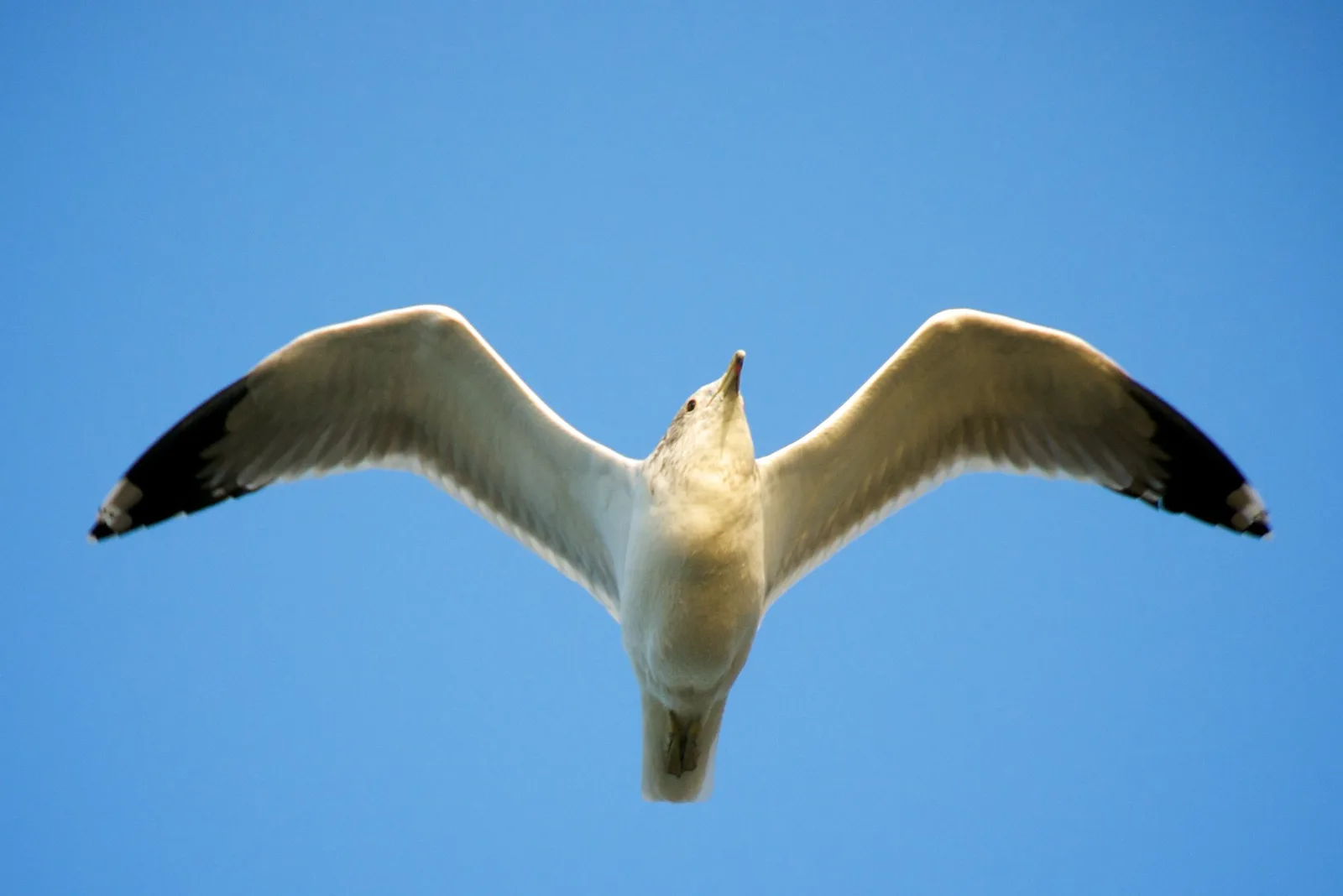
Seabirds are among the easiest wild birds to find and among the most exciting to photograph. Gulls hang in the wind above every beach and harbor, pelicans skim the waves in long lines, terns dive headfirst for fish and cormorants dry their wings on rocks and posts. Wherever land meets sea, seabirds bring life, movement and character to the scene, and they are perfect subjects for learning bird photography.
This guide covers where to find seabirds, how to approach them, how to photograph them in flight and in wind, light at the coast, behavior worth waiting for, seabirds in the landscape, settings, gear care and ethics. For bird photography in general, see the guide on how to photograph birds, and for coastal scenes, see the guide to beach photography.
Why seabirds make great subjects
Seabirds combine accessibility with drama. Many species are bold around people, and the coast gives them big skies, moving water and strong light as a backdrop.
- They are easy to find. Beaches, piers, harbors, ferry decks, cliffs and estuaries all hold seabirds, often in large numbers.
- They are often bold. Gulls in particular are used to people, so you can practice close portraits without special gear.
- They fly beautifully. Gliding gulls, diving terns and pelicans skimming the surf are perfect for learning flight photography.
- They live in dramatic settings. Crashing waves, sea cliffs, piers and boats give context and atmosphere.
- They have character. Squabbling, calling, stealing food and posing on posts give endless funny and expressive moments.
Seabirds are also forgiving teachers. A gull that flies off will usually be replaced by another within minutes, so you can practice timing and tracking over and over in a single visit.
Where to find seabirds
Start with a busy beach or harbor. Gulls gather wherever there is food: fishing boats, fish markets, beach parking areas and picnic spots. Piers and breakwaters are excellent places to photograph birds flying past at eye level, since you can stand above the water and watch them come along the coast. Ferries and small boats offer gulls hanging in the wind right beside the deck.
For wilder species, look for sea cliffs, offshore rocks, estuaries and coastal nature reserves. Many seabird colonies, where birds nest in huge numbers, can be viewed from cliff paths or by boat at certain times of year. Local nature reserves, birding groups and park websites usually share when and where colonies are active and how to view them without disturbing birds.
Common seabirds and their habits
- Gulls are everywhere, bold and noisy. They glide, hover in the wind and squabble constantly.
- Pelicans fly low in lines over the waves and plunge dive for fish. They often rest on piers and posts.
- Terns are slender and fast, hovering before diving headfirst into the water.
- Cormorants dive from the surface and stand with wings spread to dry.
- Puffins, gannets and other colony birds live in dramatic cliff colonies in some regions during the nesting season.
Learning a little about each species helps you predict where a bird will go and what it will do next, which is half of good wildlife photography. A small field guide or a bird identification app makes the learning faster and adds a lot of enjoyment to every coastal walk.
Approaching seabirds
Bold gulls often let you get close, but wilder seabirds need care. Move slowly, stay low and avoid walking straight at birds resting on the beach. Approach at an angle and stop often. If birds stop feeding, start calling, raise their heads or walk away, you are too close.
On beaches, resting flocks of gulls and terns are easily flushed by walkers and dogs. Each time they fly they waste energy, so give them a wide berth and use a longer lens instead. On piers and harbors, birds are used to people and often come close on their own, especially around fishing boats. Sit quietly and let them come to you.
Getting to eye level
As with all birds, eye level makes a big difference. Kneel or sit on the sand for birds on the beach, or find a spot on a pier where birds on posts and railings are at the same height as you. A low angle puts the bird against the sky or the sea rather than the sand, which makes a cleaner and more dramatic background.
Seabirds in flight
Seabirds in flight are the main attraction for many photographers, and the coast is one of the best places to practice. Gulls in particular are wonderful for learning, because they fly slowly, often hang in one place and keep coming back.
- Use the wind. Birds take off and land into the wind and often hover facing into it. Stand with the wind at your back and the birds will face you.
- Use a fast shutter speed. 1/2000 second or faster freezes wings. Gliding gulls can be sharp at slower speeds.
- Use continuous autofocus. Track the bird before pressing the shutter and keep panning after.
- Start with gliders. Gulls and pelicans gliding along a beach are easier to follow than fast terns.
- Keep the background simple. Clear sky or plain sea makes focusing easier and the shape stronger.
Watch for diving birds, too. Terns hover briefly before plunging, and pelicans fold their wings as they dive. Pick a hovering bird, keep it in the frame and shoot a burst as it drops. The guide to freezing motion covers fast shutter speeds in more detail.
Exposing for white birds against the sky
Many seabirds are white or pale gray, and they often fly against bright skies. Two problems come up: white feathers lose detail in bright sun, and birds against a bright sky turn too dark when the camera exposes for the sky. Check the histogram and highlight warning often. For white birds in sun, use a little negative exposure compensation. For birds against a bright overcast sky, add a little positive compensation so the underside of the wings keeps detail. The guide to exposure compensation explains how.
Light at the coast
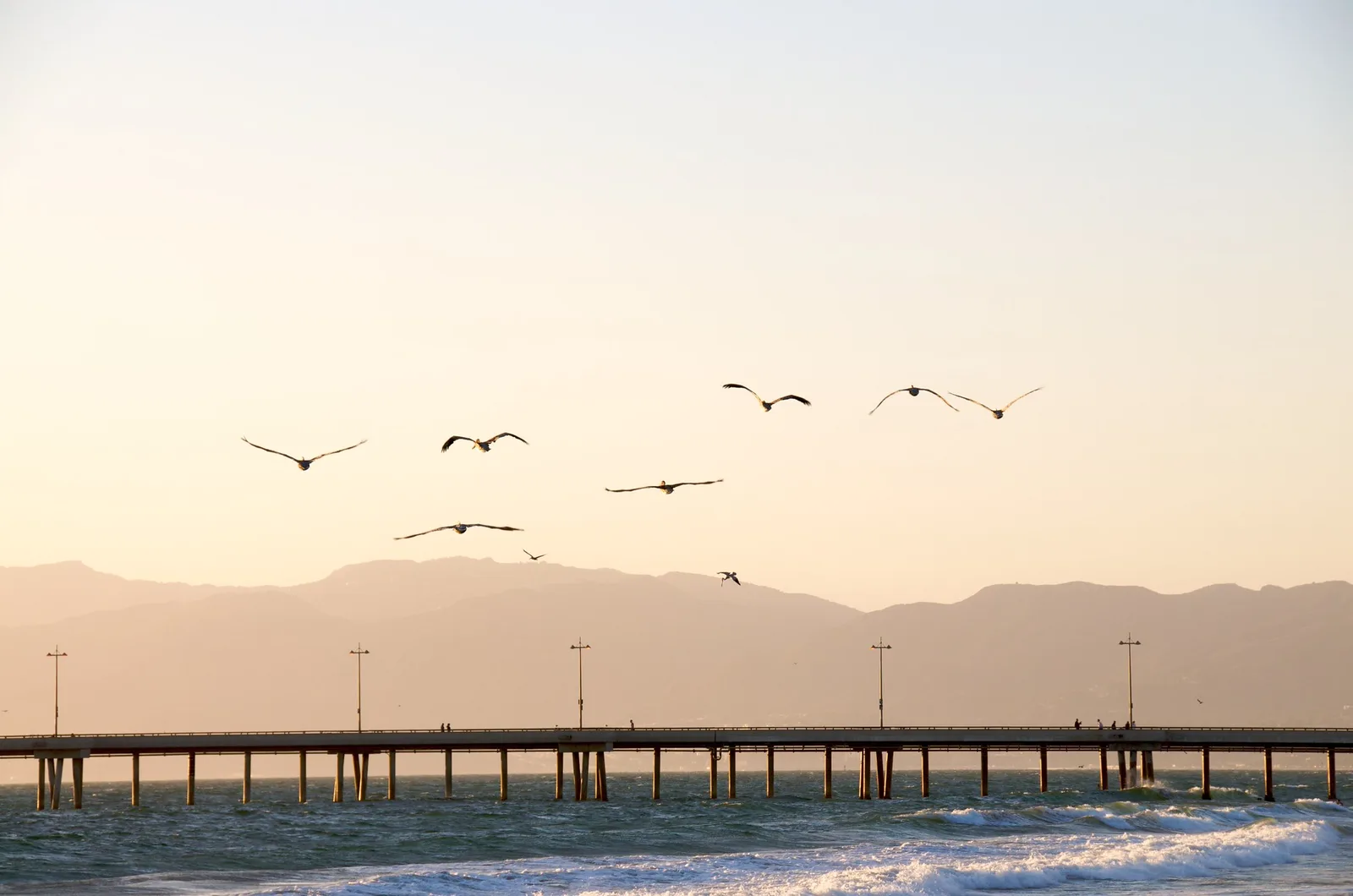
Coastal light can be intense. Sun reflects off water and sand, making midday contrast harsh. Early morning and late afternoon give warmer, softer light that brings out texture in feathers and makes the sea glow. Low sun behind birds creates silhouettes and bright rims on wings, especially lovely with pelicans or gulls against a sunset.
Overcast days are underrated at the coast. Soft light holds detail in white feathers and dark water, and moody gray skies suit seabirds, waves and rocks well. Fog and mist can be beautiful too, with birds appearing as soft shapes over the water. The guide to golden hour photography explains how to plan around the best light.
Want to make pictures of the sea itself as well as its birds? The guide to seascape photography covers waves, rocks and long exposures at the shore.
Behavior worth waiting for
Patience brings the most memorable seabird pictures. Watch for these moments:
- Calling. Gulls throw back their heads and shout, beaks wide open. As the guide to humor in photography notes, they lean forward first, which gives you a moment of warning.
- Squabbles over food. Gulls chase and steal from each other constantly. Use a burst.
- Wing drying. Cormorants stand with wings spread like a cape, holding the pose for long periods.
- Landing on posts. Birds landing on pier posts or railings spread their wings and feet. Focus on the post and wait.
- Diving. Terns and pelicans plunge into the sea, sending up splashes.
- Bathing and preening. Gulls bathing in shallow pools splash and flap energetically.
Once you have seen a behavior a couple of times, you can anticipate it and be ready. That is how the best pictures happen.
Seabirds in the landscape
Seabirds are part of the coast, and some of the best pictures show them small in a big scene: a line of pelicans over a pier at dusk, a gull above crashing waves, a cormorant on a lone rock or a flock of terns against storm clouds. These pictures say as much about the place as the birds.
Use a shorter lens or zoom out. Place the birds against a clean part of the sky, and wait for them to fill a gap rather than overlapping a busy horizon. With a line of flying birds, try to catch them when they are evenly spaced. The guides to negative space and minimalist photography help with simple, open compositions.
Piers, harbors and boats
Seabirds and human structures go together. A gull on a weathered pier post, pelicans resting on a fishing boat or terns lined up on a harbor wall make strong, simple pictures with a sense of place. Look for bold shapes and lines, and wait for birds to land in the right spot.
Visiting seabird colonies
In some coastal regions, seabirds gather in huge nesting colonies on cliffs, islands and rocky stacks. Thousands of birds coming and going, calling and squabbling over ledges make an unforgettable sight and a wonderful chance for pictures. Puffins carrying fish, gannets landing on crowded ledges and terns defending nests are classic colony scenes.
Colonies are sensitive places. Visit only where viewing is allowed, stay on marked paths and behind barriers and keep voices low. Many colonies are reached by boat tours or cliff paths with viewing points, and guides know where birds can be watched without harm. Bring a longer lens, use a fast shutter speed for the constant traffic of birds and be patient, since the best moments often come after an hour of watching. Smell, noise and wind are all part of the experience, so dress warmly and enjoy it.
Ready to photograph other wild animals with the same patience? The guide to wildlife photography covers fieldcraft, lenses and behavior for many species.
Settings for seabirds
- Birds in flight: 1/2000 second or faster, aperture f/5.6 to f/8, continuous autofocus and burst mode.
- Gliding birds: 1/1000 second is often enough.
- Resting birds: 1/500 second and a wide aperture for a soft background.
- ISO: auto ISO with a sensible upper limit. Coastal light is usually bright enough for low ISO.
- Lens: 200mm to 400mm for most seabirds, with shorter lenses for bold harbor gulls and wide scenes.
- Focus area: a small zone for birds against busy backgrounds, a larger zone for birds against clean sky.
For a deeper look at camera settings for animals, see the best camera settings for wildlife.
Caring for gear at the coast
Salt spray, sand and wind are hard on cameras. Change lenses away from the wind, keep a lens hood on to block spray and wipe the front element with a clean microfiber cloth. At the end of the day, wipe the camera body with a slightly damp cloth to remove salt, then dry it. Keep the camera in a bag when it is not in use, especially on windy beaches.
Editing seabird photos
Keep editing natural. Recover highlights in white feathers, lift shadows on undersides of wings and keep the sea and sky believable colors. Crop to give flying birds room to fly into, and level the horizon carefully, since a tilted sea is very noticeable. Remove small distractions such as a stray piece of litter only if it can be done cleanly.
Need a simple, step by step editing routine? The guide to photo editing for beginners walks through the basic steps in order.
Ethics and responsibility
Seabirds face many pressures, from disturbance to pollution. Photograph them responsibly. Never chase resting flocks or let dogs run through them. Keep well away from nesting colonies and follow any closures or seasonal rules. Do not feed gulls, since it encourages aggressive behavior and is often against local rules. If a bird looks injured or tangled in fishing line, contact local wildlife rescue rather than trying to help it yourself.
Pick up fishing line, plastic and litter when you can. It harms many seabirds every year, and a few minutes of cleanup helps the places that give you pictures.
Common mistakes
- Shooting with the wind in your face. Birds face into the wind, so stand with it at your back.
- Too slow a shutter speed. Use 1/2000 second or faster for flapping wings.
- Blown white feathers. Check the highlights and use negative exposure compensation in sun.
- Dark birds against bright sky. Add positive compensation so the wings keep detail.
- Tilted horizons. Level the sea in camera or when editing.
- Flushing resting flocks. Give them space and use a longer lens.
- Forgetting gear care. Wipe away salt and sand after every visit.
Try this: a 10-minute seabird session
Find a beach, pier or harbor with gulls, and give yourself ten minutes:
- Minutes one to three: watch the birds and note which way the wind blows. Stand with it at your back.
- Minutes four to seven: track gliding or hovering gulls against clean sky with a fast shutter speed and burst.
- Minutes eight to ten: zoom out and make one picture that shows a bird small in the coastal scene, with waves, a pier or rocks.
Compare the close flight shots and the wide scene at home. Both tell a different story about the same birds.
Frequently asked questions
What lens is best for seabirds?
A 200mm to 400mm lens works well for most seabirds. Bold gulls in harbors can be photographed with shorter lenses, and wider lenses suit coastal scenes.
What shutter speed freezes a gull in flight?
Around 1/2000 second freezes flapping wings. Gliding gulls can be sharp at around 1/1000 second.
Why are my white birds overexposed?
Bright sun and white feathers easily lose detail. Check the highlight warning and dial in negative exposure compensation.
How do I protect my camera at the beach?
Change lenses away from the wind, use a lens hood, wipe off spray and keep the camera in a bag when not in use.
Is it okay to feed gulls for pictures?
It is best not to. Feeding encourages aggressive behavior and is often against local rules.
For terms such as burst mode, exposure compensation, continuous autofocus and telephoto lens, see the photography glossary.