To photograph camera-shy people, start by respecting their comfort: ask, explain why you want the photo, and accept a no. Then lower the pressure. Keep the camera down until you need it, chat first, give them something to do, shoot from a little further away with a longer lens, and show them good frames early. If they still do not want their face shown, make photos that tell their story without it: hands, silhouettes, backs, details and small figures in a big scene.
Almost everyone knows someone who hates having their photo taken. Maybe it is a parent who always ducks out of group shots, a friend who covers their face, or a partner who says “I always look terrible in photos”. Maybe it is you.
Camera shyness is very common, and it is not something to bulldoze through. People have real reasons: they dislike how they look, they have had bad experiences, they feel anxious being watched, or they simply value their privacy. A good photographer respects that, and then finds gentle ways to make the experience easier.
This guide is for beginners. It explains why people feel camera shy, how to ask and when to stop, simple techniques that make photos less stressful, how to make lovely pictures without showing faces, and the mistakes to avoid. There is a 10-minute exercise and an FAQ at the end.
Why people are camera shy
Understanding the reason helps you choose the right approach. Common reasons include:
- They dislike how they look in photos. This is the most common reason. Often it comes from a few unflattering snapshots taken with harsh flash or from awkward angles.
- They feel watched. A camera pointed at you is a kind of attention, and some people find attention uncomfortable.
- They do not know what to do. Without direction, people freeze and then feel embarrassed about freezing.
- Privacy. Some people do not want their image online, at all, ever. That is a valid choice.
- Bad past experiences. Being photographed without consent, mocked for a photo, or having photos shared without permission.
Notice that most of these are about feelings, not about looks. Your job is to change how the experience feels, not to convince anyone that they are photogenic.
Start with consent
Before any technique, the most important step: ask, and listen to the answer.
- Ask clearly. “Would you mind if I took a few photos of you?” is better than starting to shoot and hoping they do not notice.
- Explain why. “I’d love a photo of you with the cake you made” gives a reason that is about them, not about you practising.
- Offer control. “I’ll show you everything, and I’ll delete any you don’t like.” This one promise removes a lot of fear.
- Accept no. If they say no, smile and say “no problem”. Do not keep asking. People often warm up later when they see you respected their first answer.
- Ask about sharing. Never post someone’s photo online without asking, especially someone who is shy.
Respecting a no is not losing a photo. It is building the trust that gets you a better photo another day.
Lower the pressure
Once someone agrees, your next job is to make the camera feel less intense. Small changes make a big difference.
Keep the camera down at first
Chat with the camera hanging at your side or resting on a table. Talk about anything except photos. When you raise the camera, it feels like a small part of the conversation rather than the main event.
Set up before they arrive
Know your settings before you start. Fiddling with dials while someone waits, staring at you, is uncomfortable for both of you. Choose a spot with soft, flattering light such as open shade or a window (the guide to window light portraits shows how), take a test shot, and be ready.
Step back and zoom in
A camera right in someone’s face feels confrontational. Standing further back and using a longer focal length, such as a short telephoto lens or the zoomed end of a kit lens, feels much less intense. It is also more flattering, because faces look more natural from a little distance.
Use a smaller camera
A big camera with a long lens can look serious and intimidating. A phone or small camera feels casual. For very shy people, the camera they already know, a phone, is often the best choice.
Turn off the noise
A loud shutter firing again and again makes people aware of every frame. If your camera has a quiet or silent mode, try it.
Give them something to do
Shy people find it much easier to be photographed doing something than being photographed doing nothing. An activity takes their attention away from the camera and gives their hands and face something natural to do.
Ideas:
- Cooking, baking or pouring coffee.
- Gardening, painting, knitting or fixing something.
- Playing an instrument or a game.
- Walking with a dog, or playing with a pet.
- Reading, writing or sketching.
- Talking with a friend while you photograph quietly nearby.
Photos like these are often called “in their element” or environmental portraits. They tend to be the photos families treasure most, because they show the person as they really are. The candid photography guide has more on catching natural moments.
When they are absorbed in the task, keep the shutter going quietly. The moment they look up and smile at you, which they often will, is a great frame.
Talk them through it
Silence behind a camera makes shy people feel judged. Keep up a gentle, friendly conversation.
- Ask easy questions about things they love: their garden, their favourite meal, their pet.
- Tell them what you are doing: “I’m just finding the light, you’re doing great.”
- Give simple directions, one at a time: “Could you look toward the window for me?”
- Praise genuinely: “That one is lovely.”
The guide on how to direct people in photos covers this in more detail.
Show them a good photo early
Many camera-shy people have never seen a flattering photo of themselves. Once you have one good frame, turn the camera around and show them. Seeing a photo they like can change their whole attitude in a second.
Only show frames you are confident about. Showing a blinking, mid-word photo early will make things worse.
Use flattering light and angles
Part of why people dislike photos of themselves is that many snapshots are taken in bad light. You can make a big difference by choosing good light.
- Soft light. Window light, open shade or a cloudy day smooth skin and soften shadows. The guide to hard vs soft light explains why.
- Avoid on-camera flash. Direct flash flattens faces and creates harsh shadows. It is behind many photos people hate.
- Camera at eye level or slightly above. Shooting up from below is rarely flattering.
- Turn the body slightly. A small angle to the camera looks more relaxed than standing square on.
- Chin forward and slightly down. This defines the jaw and is a common request from people who worry about their chin.
Photos that do not show the face
Some people will never be comfortable showing their face, and that is fine. You can still make beautiful, meaningful photos of them. In fact, these photos often have more mystery and emotion than a straightforward portrait.
Ideas for faceless portraits:
- Hands. Hands at work, holding a mug, playing an instrument, holding a grandchild’s hand. Hands tell stories. The guide to posing hands has tips.
- From behind. A person walking away down a path, looking at a view, or sitting on a bench. The viewer looks where they look.
- Silhouettes. Place the person in front of a bright window or sunset and expose for the bright background. They become a dark shape. The silhouette guide explains how.
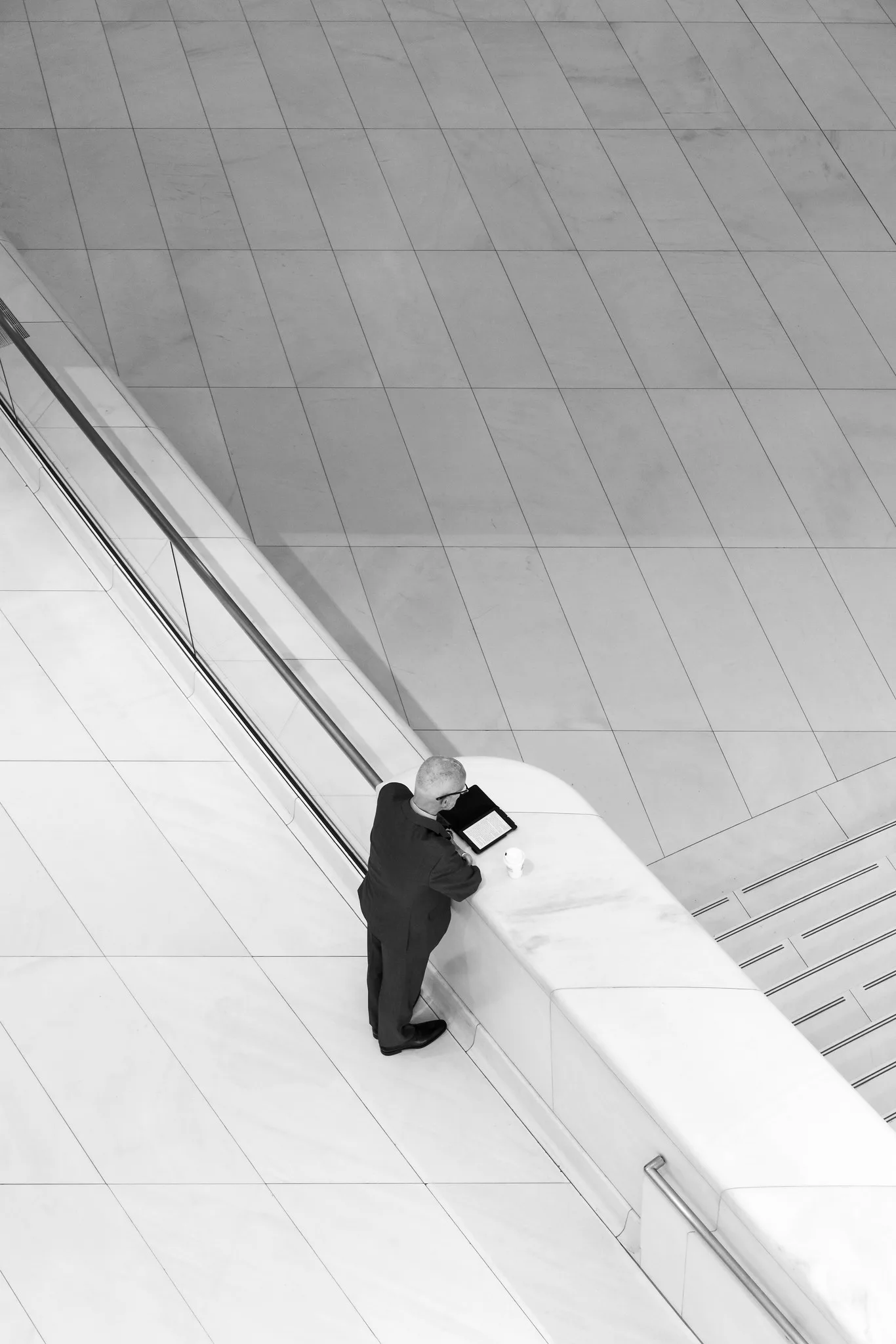
- Small in the frame. A tiny figure in a big scene, like the reader on the staircase below, makes a striking photo without any face at all.
- Details. Their shoes, glasses on a table, a scarf, a well-used tool. Objects can stand in for a person.
- Shadows and reflections. A shadow on a wall or a reflection in a puddle or window.
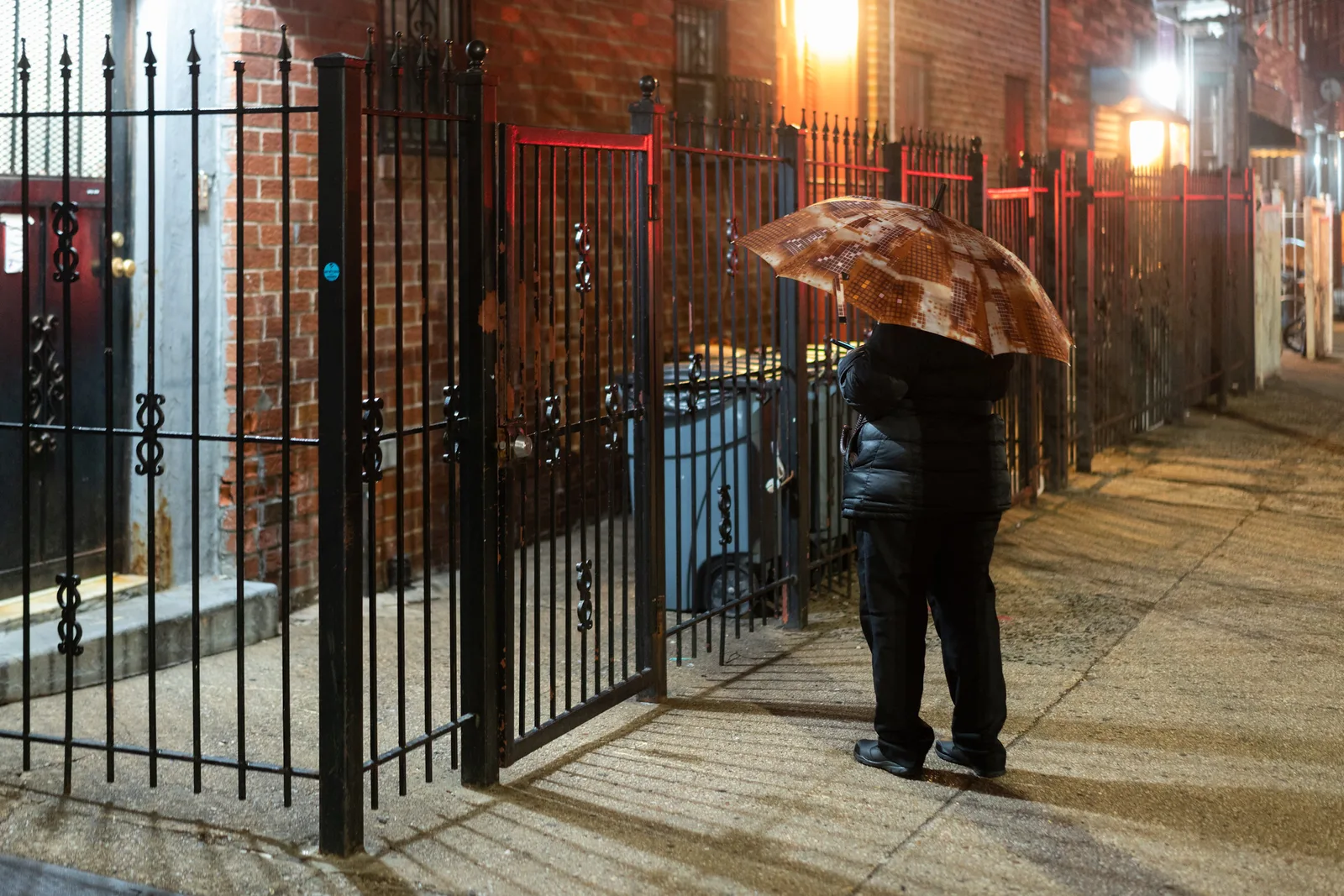
- Partly hidden. An umbrella, a hat brim, a book, or soft focus can hide the face while still showing the person, as in the umbrella photo at the top.
Camera-shy people at events and gatherings
Family gatherings, parties and celebrations, covered in more depth in the event photography guide, are where shy people most often duck out. A few tips:
- Shoot early and often. When the camera is around for a while, people stop noticing it. The first ten minutes are the hardest.
- Use group shots. Many shy people are happier in a group than alone. Standing with others feels safer. See the group photography tips.
- Photograph them with someone they love. A shy grandparent next to a grandchild, or a person with their pet, relaxes because the attention is shared.
- Do not single them out loudly. “Come on, you have to be in the photo!” in front of everyone adds pressure. Ask quietly instead.
When you are the camera-shy one
Many photographers dislike being photographed, which is partly why they stand behind the camera. Practising being in front of the lens helps you understand how your subjects feel.
Try making self-portraits with a timer. You control everything: the light, the angle, when to delete. Many people find that seeing a few photos of themselves that they like makes them more relaxed when others take their photo too.
Privacy and ethics
Camera shyness sometimes overlaps with genuine privacy needs. Treat these carefully.
- Some people have serious reasons, such as safety concerns, for not wanting their image shared. You do not need to know the reason to respect it.
- Ask before posting, tagging or sharing any photo of someone.
- If someone asks you to delete a photo, delete it.
- Be extra careful with children. Ask a parent or guardian, and think hard before sharing.
Trust is the most valuable thing you build as a photographer of people. Protecting it is worth far more than any single photo.
Patience pays off
Camera-shy people rarely change their minds in one session. But many do warm up over time, especially when they see that you are respectful, that you show them only good photos, and that you delete what they dislike.
Think of it as a long game. A friend who says no now might be the person who asks you for a portrait next year, because you were the one photographer who made them feel comfortable.
Phones, timers and remote shutters
Sometimes the least scary camera is no photographer at all. A few tools let you step away from the camera entirely, which can help very shy people relax.
- Self-timer. Set the camera on a shelf or table, frame the scene, start the timer and walk away. Nobody is staring through a viewfinder, so the moment feels less like a photo shoot.
- Remote shutter. Many cameras can be triggered from a phone app or a small remote. You can sit beside the person, chatting normally, and take photos without touching the camera.
- Burst mode. Taking several frames in quick succession means you are more likely to catch a relaxed expression between the tense ones.
- Let them hold the remote. Giving the shy person control over when the photo is taken can turn the whole experience around. They decide when they are ready.
These tricks also work for family photos where you want to be in the picture too. Everyone, including the photographer, ends up in the frame, and the shy person is just one of the group.
Common mistakes
- Ignoring a no. Pushing breaks trust. Accept it and try again another time, gently.
- Sneaking photos of someone who refused. This is the fastest way to lose trust completely.
- Getting too close. A lens in someone’s face feels aggressive. Step back and zoom in.
- Using harsh on-camera flash. It creates exactly the unflattering photos shy people fear.
- Going silent. Keep a friendly conversation going.
- Saying “just act natural”. It makes people more self-conscious. Give a simple task or direction.
- Showing bad frames. Only show photos you are confident they will like.
- Posting without permission. Always ask before sharing anything.
- Calling them out in public. Ask quietly, not in front of a crowd.
Try this: a 10-minute gentle portrait
Ask a friend or family member who is a little camera shy if they would help you practise, and promise to delete anything they do not like.
- Minute 1 to 2: Choose a spot with soft window light. Set your camera and take a test shot of an object in the same place.
- Minute 3 to 4: Chat with the camera down. Ask about something they enjoy.
- Minute 5 to 6: Give them a task: making tea, reading, sketching. Step back, zoom in, and take quiet photos while they work.
- Minute 7: Take three faceless frames: hands, from behind, and a detail.
- Minute 8: Show them your best frame so far.
- Minute 9: If they are comfortable, ask them to look up at you and think of something that makes them smile.
- Minute 10: Review together and delete any photos they dislike, right there in front of them.
Notice how they react when they see you delete photos. That moment of trust is the foundation of good people photography.
Frequently asked questions
How do I photograph someone who hates having their picture taken?
Ask first and accept no. If they agree, chat before shooting, give them a task, step back with a longer lens, use soft light and show them a good frame early.
How can I make a camera-shy person relax?
Keep the camera down at first, keep talking, give simple directions one at a time, and promise to delete any photos they do not like.
Can I take portraits without showing someone’s face?
Yes. Hands, silhouettes, photos from behind, small figures in a big scene, shadows and details all make meaningful portraits.
Which lens is best for camera-shy people?
A slightly longer focal length lets you stand further back, which feels less intense and is more flattering. A phone also works well because it feels casual.
Should I take candid photos of someone who said no?
No. If someone has said no, respect it. Sneaking photos breaks trust.
Why do people say they are not photogenic?
Usually because most photos of them were taken in harsh light, from bad angles or at awkward moments. Soft light and a relaxed moment often change their mind.
Want to know what to say so people relax in front of the camera? Read how to direct people in photos.
Curious how to make a dramatic portrait where the face is just a dark shape? Try the silhouette guide.