The Steerage is a black and white photograph Alfred Stieglitz made in June 1907 on the liner Kaiser Wilhelm II, looking down from the first-class deck onto the crowded decks of the cheapest passengers below. It matters because it is one of the first photographs to be valued not mainly for what it records but for how its shapes fit together, and Stieglitz used it to argue that an unmanipulated photograph could stand beside modern painting.
The picture is in the public domain and easy to find: see the photograph itself at the Metropolitan Museum of Art and keep it open while you read. This page covers how it was made, what is in the frame, why Stieglitz cared about it, how it was published, the myths that have grown around it, and what you can take from it into your own photography.
A Voyage to Europe in 1907
In June 1907 Stieglitz sailed from New York to Bremen, Germany, with his wife Emmeline and their daughter Kitty to visit family in Europe. Emmeline wanted first class, so they had a stateroom on the upper decks of one of the largest and fastest liners of the day. Stieglitz, by his own account, found the company there tiresome.
A few days out he walked to the end of the first-class deck and looked over the rail. Below him were the steerage decks, where passengers who had paid the lowest fares travelled in open, crowded quarters. He later said he forgot the people around him and saw only the scene below.
At that point in his life Stieglitz was the best-known art photographer in America. He ran the magazine Camera Work and the gallery at 291 Fifth Avenue, and most of the work he championed was soft, painterly pictorialism. The Alfred Stieglitz page tells that larger story; this page stays with the one picture.
One Plate, One Exposure
He had no camera with him at the rail. He ran to his cabin, took his Graflex, and ran back hoping the man in the straw hat had not moved. The camera was a hand-held 4×5 Auto Graflex, a reflex box camera that let him see the scene on a ground glass, at full size, right up to the moment of exposure. It took glass plates, and he had one prepared plate left.
So there is one negative. There was no bracketing, no second try and no way to check the result until he reached Paris, where he developed the plate about a week later in a borrowed darkroom. A large format plate of that size records fine detail, which is part of why the crowd below reads as dozens of separate people rather than a grey mass.
Having a single plate also explains the picture’s feel. Stieglitz could not walk around and work the scene the way a photographer with a phone can now. He had to see the picture whole before he pressed the release, which is a skill the previsualization page treats on its own.
What Is in the Frame
The frame is taller than it is wide, and a white gangway, a narrow walkway bridge freshly painted, cuts across it a little above the middle. That one bar splits the picture into two worlds.
Above the gangway is an upper deck. A row of passengers leans on its railing, and near the centre one young man wears a round, light straw hat, the small bright disc Stieglitz said first caught his eye. A mast with cargo booms slants in from the top left. Stieglitz remembered it as a funnel leaning one way, but photographs of the ship suggest it was a mast. On the right, an iron stairway slants the other way, down between the decks.
Below the gangway is the lower deck, packed with men, women and children: people sitting, standing, washing, talking. Light catches white cloth across the crowd, including the crossed white suspenders on one man’s back and a pale shawl with a dark stripe worn by a woman in the lower half. Chains hang in loops along the gangway’s railings, a row of soft curves over the crowd.
Note what is not in the frame: first class. The upper deck in the picture is a second lower-fare deck, not the wealthy one. Stieglitz stood higher still, outside the picture, looking down on both.
Shapes Before Story
Stieglitz wrote his account of the picture in 1942, 35 years later, and it is almost entirely about form. He listed a round straw hat, a funnel leaning left, a stairway leaning right, a white drawbridge with railings made of circular chains, white suspenders crossing on a man’s back, round shapes of machinery, and a mast cutting into the sky in a triangle. “I saw shapes related to each other,” he wrote, “a picture of shapes and underlying that the feeling I had about life.”
That is the lesson most photographers take from it. The scene is crowded and could easily have been chaos. It holds together because a few strong shapes carry the structure and the crowd fills the spaces between them:
- A horizontal bar. The gangway is the brightest, simplest shape in the frame. It divides the picture and gives the eye a level place to rest.
- Opposing diagonals. The mast slants one way at the top, the stairway the other way at the side. Two diagonals pulling in opposite directions keep the frame from feeling static.
- Repeated circles. The hat, the looped chains and the round heads of the crowd echo each other, so the eye links things that are far apart.
- Small white accents. The hat, the suspenders and the shawl are bright points scattered through darker tones, and the eye jumps between them. That is visual hierarchy at work: the brightest, highest-contrast things are seen first.
- Flattened space. Looking steeply down compresses the two decks into stacked bands on the picture plane. Depth turns into pattern, which is why critics have called the design divided, fragmented and flattened, close to Cubism.
It also works the other way round from a foreground, midground and background landscape. Instead of receding into depth, the layers sit on top of each other like strips of a collage.
Want to practise seeing a scene as shapes rather than things? How to see like a photographer has exercises for training that habit.
Form and Feeling: Two Ways to Read It
Stieglitz’s account barely mentions who the passengers were. For him the picture was about shapes and his own feeling about life, and many writers have followed him in discussing it as pure design.
Others point out that a picture of the poorest people on a ship, taken by a man who had walked away from first class to look down at them, cannot be only about shapes. The deck is literally divided by class, and the picture shows the division from above. That is why The Steerage is also read beside the social photography of the same years, such as Lewis Hine‘s pictures of immigrants and child workers. Hine went in among his subjects and often recorded their names; Stieglitz stayed at the rail.
Neither reading cancels the other. The picture is strong because the formal structure and the human content line up: the gangway that organises the design is also the barrier that separates the people. Good documentary photography often works the same way, with the form carrying the meaning rather than decorating it.
How It Was Published
Despite how Stieglitz later told the story, he did not rush the picture out. He did not print it for publication until 1911, four years after he made it.
- 1907: Where: Aboard the Kaiser Wilhelm II, developed in Paris. Form: One 4×5 glass plate negative.
- 1911: Where: Camera Work No. 36 (October), an issue of Stieglitz’s own photographs. Form: Photogravure, about 19 by 15 cm.
- 1913: Where: His exhibition at the gallery 291. Form: First exhibited.
- 1915: Where: The magazine 291, No. 7 to 8 (September to October). Form: A whole issue given to one large photogravure, about 33 by 27 cm, with short texts by Paul Haviland and Marius de Zayas.
A photogravure is an ink print made from a photograph through an etched copper plate. Stieglitz used gravures in Camera Work because they could be printed in quantity with rich, deep blacks, and he treated them as fine prints rather than as illustrations. The 1915 issue was an unusual gesture: an entire magazine given over to one photograph.
Those four years matter. By 1911 Stieglitz had shown Matisse, Cézanne watercolours and Picasso at 291 and was thinking hard about modern art. Biographers such as Richard Whelan argue that he did not see the picture’s importance in 1907 and set it aside, and that he came back to it once his ideas about photography had changed. The painter Max Weber later claimed he was the one who found it in Stieglitz’s files and pointed out what it was.
When it did appear, it became a manifesto. Stieglitz was turning from pictorialism, with its soft focus and handwork on the print, toward straight photography: sharp, unmanipulated pictures that look like nothing but photographs. The photography movements page explains both camps. The last issue of Camera Work, in 1917, went almost entirely to Paul Strand, whose hard-edged pictures took the same idea further.
Want to see the pictorialist side of that turn? Edward Steichen, Stieglitz’s partner at 291, began as a leading pictorialist and later moved to sharp commercial and war photography.
Why It Became So Famous
Several things came together. It was made by the most influential figure in American photography, who published, exhibited and talked about it for decades. It was a clear early case of a straight, unposed, hand-held photograph being treated as a serious work of art. And its design connected photography to Cubism at the moment modern art arrived in New York: Picasso is reported to have said, on seeing it, that the photographer was working in the same spirit as he was.
Stieglitz himself counted it among his best pictures for the rest of his life. Prints are now held by the Metropolitan Museum of Art, the National Gallery of Art, the Museum of Modern Art, the Art Institute of Chicago, the Library of Congress and many others.
Common Mistakes When Reading The Steerage
- “It shows immigrants arriving in America.” This is the most repeated error. The ship was sailing from New York to Europe. Whoever these passengers were, they were leaving. Some may have been workers going home, some may have been turned away at Ellis Island; the photograph does not tell us, and no record names them.
- “The top deck is first class and the bottom is the poor.” Both decks in the frame are lower-fare decks. First class is where Stieglitz stood, outside the picture.
- “He knew at once it was a great picture.” That is how he told it in 1942. The four-year delay before he printed it, and his own words about a depressed summer that year, suggest he came to value it later.
- “The tall slanting shape is a funnel.” He called it one, but the ship’s photographs suggest a mast with cargo booms.
- “It is a candid snapshot, so composition did not matter.” It was taken quickly, on one plate, but the frame was chosen with great care. Speed and design are not opposites; the decisive moment depends on both.
What Photographers Can Learn From It
- Look down. A high viewpoint flattens space and turns a scene into a pattern of shapes. Balconies, bridges, stairwells and ferries are all places to try it.
- Find the bar that divides the frame. One strong line across a busy scene can organise everything around it, and if it also separates two kinds of thing, it can carry the meaning too.
- Use bright accents as stepping stones. In black and white, small light shapes against darker ones guide the eye through a crowded frame.
- See the picture before you lift the camera. With one plate, Stieglitz had to. Pretending you have one frame left is a useful discipline.
- Your own account is not the whole story. What you say a picture means and what viewers find in it can differ, and both can be true.
Try This: Find a Picture in Shapes From Above
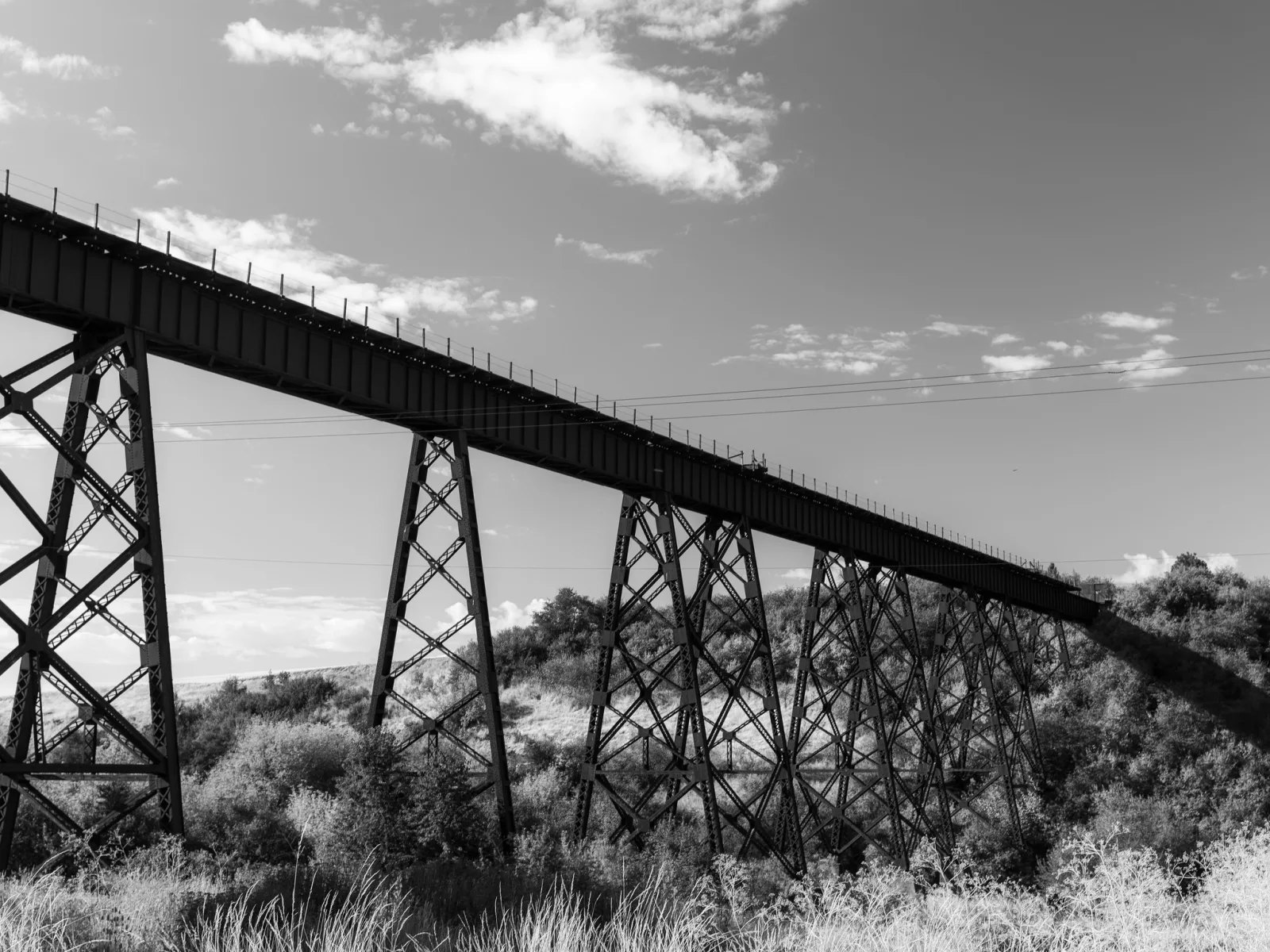
Give yourself 10 minutes and one place where you can look down on people: a balcony over a square, a footbridge over a path, a stairwell, a ferry or a parking garage.
- Before raising the camera, name three shapes out loud: one line that divides the scene, one diagonal, one repeated shape (circles, triangles, rectangles).
- Set your phone or camera to black and white so colour does not distract you from tone and shape.
- Frame so the dividing line crosses the picture and splits it into two zones, then wait for a small bright accent, a hat, a white shirt, a bag, to land in a good spot.
- Allow yourself five frames in total. Treat each as your last plate.
How to judge the result. Squint at each frame until the detail goes. If you can still see a clear structure of a few shapes, the picture works as design. Then ask whether the dividing line means something, whether the two zones hold different kinds of activity or people. A frame that passes both tests is doing what The Steerage does. If it only passes the first, try a tighter crop or a different moment.
Curious how far a picture can go once shapes become the subject? Abstract photography takes the idea all the way.
Frequently Asked Questions
When and where was The Steerage taken?
In June 1907, on the liner Kaiser Wilhelm II, on a voyage from New York to Bremen in Germany. Stieglitz took it from the first-class deck looking down on the steerage decks.
Were the people in The Steerage immigrants coming to America?
No. The ship was sailing away from America, toward Europe. Who the passengers were is not recorded, but they were leaving the United States, not arriving.
What camera did Stieglitz use for The Steerage?
A hand-held 4×5 Auto Graflex, a reflex camera that used glass plates. He had a single prepared plate and made one exposure.
Why is The Steerage considered important?
It is one of the earliest celebrated examples of straight photography, a sharp and unmanipulated picture valued as art for its structure of shapes. Stieglitz published it as a statement of that idea, and its flattened, divided design linked photography to modern painting.
Where was The Steerage first published?
In Camera Work No. 36, October 1911, as a photogravure. In 1915 a whole issue of the magazine 291 was given to a large gravure of it.
Is The Steerage about class?
Stieglitz described it almost entirely as shapes and feeling. But it shows the poorest passengers from above, split by a gangway, and many viewers read the division as social as well as visual.
How much of this history has stuck? Try the history of photography quiz.
Want another single photograph taken apart frame by frame? The Walk to Paradise Garden by W. Eugene Smith gets the same close reading.