Autumn is one of the most photographed seasons for good reason. The landscape transforms into a palette of gold, amber, crimson, and burnt orange. The light changes quality as the sun drops lower in the sky, producing longer golden hours and richer shadows. Morning mist settles into valleys. The air clears. Every tree, field, and forest path becomes a potential photograph. Fall is a season that practically begs to be captured.
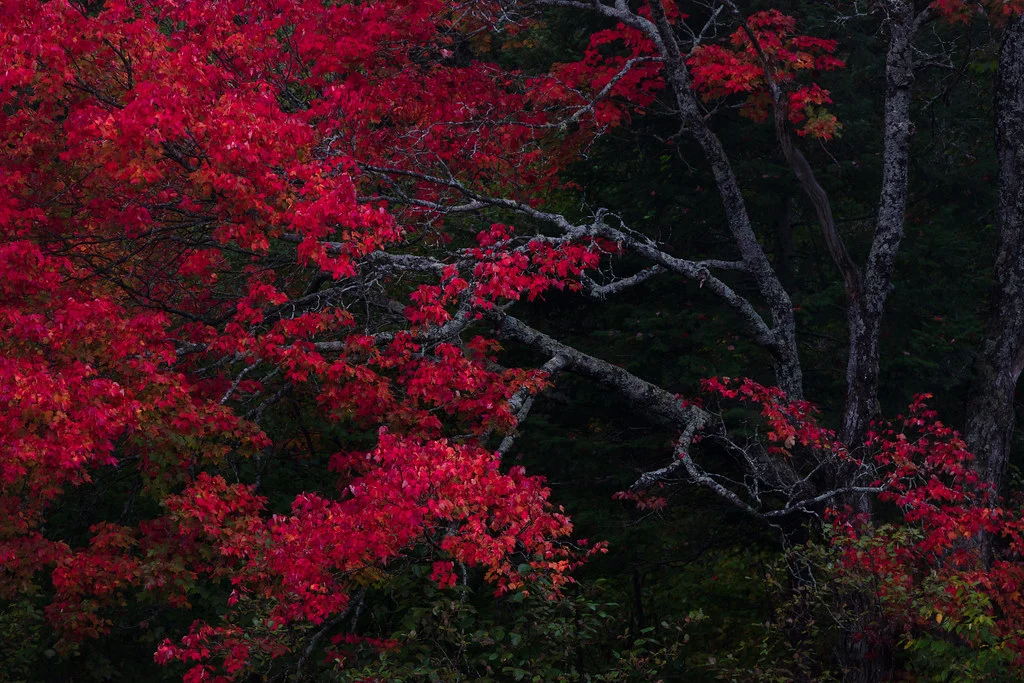
But photographing autumn well requires more than pointing your camera at colorful leaves. The most common fall photos are also the most forgettable: a wide shot of red trees with no focal point, a pile of leaves on the ground, a generic sunset behind a treeline. To create fall images that stand out, you need to understand the specific qualities of autumn light, work with (not just document) the changing colors, and apply strong compositional technique to scenes that are already visually rich. This guide shows you how.
Understanding Autumn Light
Fall light is different from summer light in ways that directly affect your photography. The sun sits lower in the sky throughout the day, even at noon. This lower angle produces longer shadows, warmer tones, and more directional light. The golden hour that lasts 20 minutes in summer can stretch to 45 minutes or more in fall. This extended period of warm, angled light is one of autumn’s greatest gifts to photographers.
Backlighting is one of the most powerful tools in fall photography. When the sun is behind a tree full of colorful leaves, the leaves become translucent, glowing with an intensity that front-lit or overcast conditions cannot match. Position yourself so the sun shines through the foliage rather than onto it. The difference is dramatic. Front-lit leaves look painted on. Backlit leaves look like they are made of stained glass. Understanding how light direction affects your subject is one of the most important skills in seasonal photography.
Want to expose well when the sun is behind your subject? Backlighting in Photography covers where to put the light, subject and background, and exposing for the subject or the background.
Overcast days have their own appeal in autumn. Soft, diffused light from a cloudy sky eliminates harsh shadows and saturates colors. Fall foliage often looks more vivid under overcast skies because there are no bright highlights or deep shadows to distract from the color. Use overcast days for forest interiors, close-up leaf details, and any scene where even lighting helps. A circular polarizer filter can further boost color saturation and reduce glare on wet leaves.
Morning mist is one of autumn’s signature atmospheric conditions. Cool nights followed by warm days create fog in valleys, over rivers, and across fields. Arrive early, before sunrise if possible, to catch the mist at its thickest. As the sun rises and begins to burn through the fog, the interplay of warm light and cool mist creates ethereal, layered images that are unique to this time of year.
Do not forget the late afternoon light. In autumn, the sun sets earlier and the angle of descent creates particularly long, golden stretches of light in the final two hours before sunset. Leaves that looked ordinary at noon become luminous at 4pm when the sun slips below the treeline and shafts of warm light cut through the forest. Shooting toward the light during these moments, with your ISO raised to maintain a fast shutter speed as the light fades, captures an intensity of color that midday cannot produce.
Composing with Color
Autumn provides an abundance of color, and that abundance can be a trap. A frame filled entirely with colorful leaves has no focal point, no story, and no visual rest. The viewer’s eye bounces around without settling on anything. Strong fall compositions use color strategically rather than indiscriminately.
Look for color contrast. A single red maple against a backdrop of green pines creates a natural focal point. A yellow birch standing beside a dark evergreen pops with intensity. The complementary relationship between warm autumn tones and cool greens, blues, or grays gives your images visual tension and depth. An overcast gray sky can actually be a powerful compositional tool against vivid foliage.
Curious why orange against blue works so well? Color Theory for Photographers covers color harmony, combinations that work, and warm versus cool tones.
Use leading lines to organize colorful scenes. A winding road lined with fall trees draws the viewer’s eye into the distance. A stream running through a forest provides a natural path through the color. A fence line bisecting a field of golden grass gives structure to what might otherwise be a chaotic scene. These compositional elements are even more important in fall because the visual richness of the scene needs organization.
Include non-autumn elements for contrast and context. A person walking through a canopy of color provides scale and a human element. A weathered barn surrounded by orange trees tells a story. A bench covered in fallen leaves invites the viewer to sit down. Without these anchoring elements, fall photos can feel like abstract color fields rather than photographs of a specific place and moment.
Consider negative space. A single colorful branch against a foggy, featureless background has more impact than a busy frame packed with foliage. Minimalist autumn compositions are rare because most photographers try to include as much color as possible. Going in the opposite direction, using restraint and isolating small pieces of the autumn landscape, often produces the most memorable images.
Close-Up and Detail Photography in Fall
Some of the most compelling fall images are not sweeping landscapes but intimate details. A single leaf on a wet rock. Dew drops on a spider web strung between autumn branches. The texture of bark against a background of golden foliage. Frost crystals on a fallen leaf at dawn. These close-up images capture the essence of the season in a way that wide views sometimes miss.
For leaf close-ups, use a macro lens or close-up filters to fill the frame with detail. Look for leaves with interesting veining, unusual color transitions, or small imperfections that add character. A leaf that is partially green and partially red, caught in the middle of its transformation, tells the story of the season in a single frame. Fallen leaves on the surface of still water create natural arrangements that are endlessly photogenic.
Shallow depth of field is your friend for autumn details. Open your aperture to f/2.8 or wider and isolate a single leaf, berry, or branch against a blurred background of fall colors. The bokeh created by out-of-focus autumn foliage, soft circles of gold, red, and orange, is uniquely beautiful and becomes a visual element in its own right.
Look down. The ground in autumn is often as photogenic as the canopy. Paths covered in fallen leaves, puddles reflecting colorful trees, mushrooms emerging from leaf litter, and fallen fruit scattered on the forest floor all provide rich subject matter. Combine a low camera angle with a wide focal length to capture the forest floor in the foreground with trees and sky in the background.
Landscapes, Water, and Reflections
Fall landscape photography benefits enormously from water. Lakes, rivers, and ponds create mirror reflections of colorful shorelines that double the visual impact of the scene. For the sharpest reflections, shoot early in the morning before wind disturbs the water surface. A calm lake reflecting a hillside of autumn color is one of the most classic fall images, and for good reason: it works.
Want a mirror-like result on a still lake? Reflection Photography covers types of reflections, camera settings and using a polarizing filter.
Flowing water in autumn creates opportunities for long exposure techniques. A waterfall surrounded by fall foliage, shot at a slow shutter speed of 1/2 second to several seconds, produces silky water against sharp, colorful leaves. Use a tripod and a neutral density filter to achieve slow enough shutter speeds in daylight. The contrast between the soft, flowing water and the crisp autumn leaves creates a compelling visual tension.
Unsure which neutral density strength to buy for daylight water shots? ND Filter Guide covers filter strengths, converting exposure times and how to use one.
Autumn is also ideal for photographing mountain and hillside views. When entire mountainsides turn color, the patchwork of different tree species at different stages of change creates a natural mosaic. Photograph these scenes in the morning or evening when side-lighting reveals the texture of the forest canopy. Midday sun from directly overhead flattens the landscape and reduces the sense of depth.
Urban fall photography offers different opportunities. City parks fill with color. Leaves scattered on sidewalks, colorful trees framing buildings, and fall light angling down between skyscrapers create scenes that combine natural beauty with architectural elements. The contrast between warm organic foliage and cool concrete or glass structures works especially well in compositions that juxtapose nature and the built environment.
Do not overlook roadways and pathways as subjects. A winding country road canopied by fall trees is one of the most timeless autumn compositions. The road itself serves as a strong leading line, pulling the viewer’s eye through layers of color. Photograph roads and paths from a low angle to emphasize the tunnel effect of overhanging branches. Early morning, before traffic, gives you empty roads that feel peaceful and inviting. These images work well as panoramic crops, stretching the sense of depth and journey.
Common Mistakes in Fall Photography
Oversaturating colors in editing. Fall foliage is already vivid. Pushing saturation or vibrance too far in post-processing makes images look artificial and garish. If your autumn photos look like they belong on a candy wrapper, you have gone too far. Let the natural colors speak for themselves and make only subtle adjustments.
Not sure which slider to reach for? Vibrance vs. Saturation explains what each one does and when to use it.
Shooting only wide landscapes. Wide shots of colorful hills are beautiful, but they are also what everyone shoots. Mix in close-ups, medium shots, details, and human elements to create a varied body of fall work. The most interesting portfolios show autumn at multiple scales.
Ignoring the weather. Many photographers only shoot fall foliage on sunny days. Overcast, misty, and rainy conditions often produce more atmospheric and unique images. Fog among autumn trees, rain drops on colored leaves, and stormy skies over golden fields all create moods that sunshine cannot replicate.
Missing the timing window. Peak fall color lasts only one to three weeks in most locations, and it varies by elevation, latitude, and species. Track foliage reports and plan your shoots around peak color. Once the leaves fall, the opportunity is gone until next year.
Neglecting white balance. Autumn light is already warm, and many automatic white balance settings try to cool it down. For fall photography, use a daylight or slightly warm white balance setting to preserve the golden quality of the light. Shooting in RAW lets you fine-tune white balance later without any quality loss.
Try This: Fall Photography Exercises
Exercise 1: The Single Tree Study. Find one particularly colorful tree and spend an hour photographing it from every angle and distance. Shoot wide to include the whole tree in its environment. Shoot from below looking up through the canopy. Shoot individual branches backlit by the sun. Shoot fallen leaves at its base. Move around it and notice how the light changes from different directions. This exercise teaches you that one strong subject, explored thoroughly, yields more interesting results than driving from location to location chasing variety. Apply what you know about the rule of thirds to find the most dynamic framings.
Exercise 2: The Color Isolation. Go out with a single color in mind: photograph only red subjects for one session, or only yellow, or only orange. This constraint forces you to look past the overwhelming visual richness of autumn and focus on specific elements. You will find your color in unexpected places: a red door, a yellow fire hydrant, orange berries, a rust-colored fence. The resulting images form a cohesive series unified by color.
Exercise 3: The Before and After. Choose a location you know well and photograph it twice: once before peak fall color (when the leaves are just beginning to turn) and once at peak color. Compare the two sets of images. Notice what changed and what stayed the same. This exercise builds awareness of how gradual the transition is and trains you to see the early and late stages of autumn, which are often more subtle and more interesting than the peak. Understanding how natural light shifts throughout the season adds depth to your observation.
Fall is generous to photographers. The colors, the light, the atmosphere, and the sense of change all provide raw material for compelling images. But generosity can lead to laziness. The easy shot is not always the best shot. Push past the obvious, look for the details, work the light, and bring strong compositional discipline to scenes that are already visually rich. That is how you make fall photographs that endure beyond the season.