Roadside motels are full of character and nostalgia. A tall sign glowing against the evening sky, a row of numbered doors in bright paint, a pool shimmering in a courtyard and a quiet room with the curtains drawn all speak of long drives, cheap coffee and nights between one place and the next. Whether you are staying at one on a road trip or passing a faded classic on the edge of town, motels make wonderful, cinematic pictures.
This guide covers why motels make great subjects, the motel sign, motels at dusk, doors, balconies and walkways, pools and courtyards, motel rooms, abandoned motels, motels in the landscape, telling a road trip story, etiquette and safety, settings, phones and editing. For neon and lit lettering, see the guide to neon sign photography, and for the stops along the way, see the guide to gas station photography.
Why motels make great subjects
Motels combine bold design with a strong sense of place and time.
- Iconic signs. Tall, colorful signs with arrows, stars and bold lettering were designed to catch the eye of drivers.
- Repeating design. Rows of matching doors, windows and parking spaces make neat patterns.
- Color. Pastel walls, bright doors and painted trim add cheerful color.
- Light. At dusk, signs, room windows and walkway lights glow warmly.
- Story. Motels suggest travel, loneliness, adventure and the freedom of the open road.
Many well known photographers have made motels a central subject, seeing in them something honest about ordinary life and travel. A simple, careful picture of a motel can feel like a scene from a film, with the viewer left to imagine who stays there and where they are going.
The motel sign
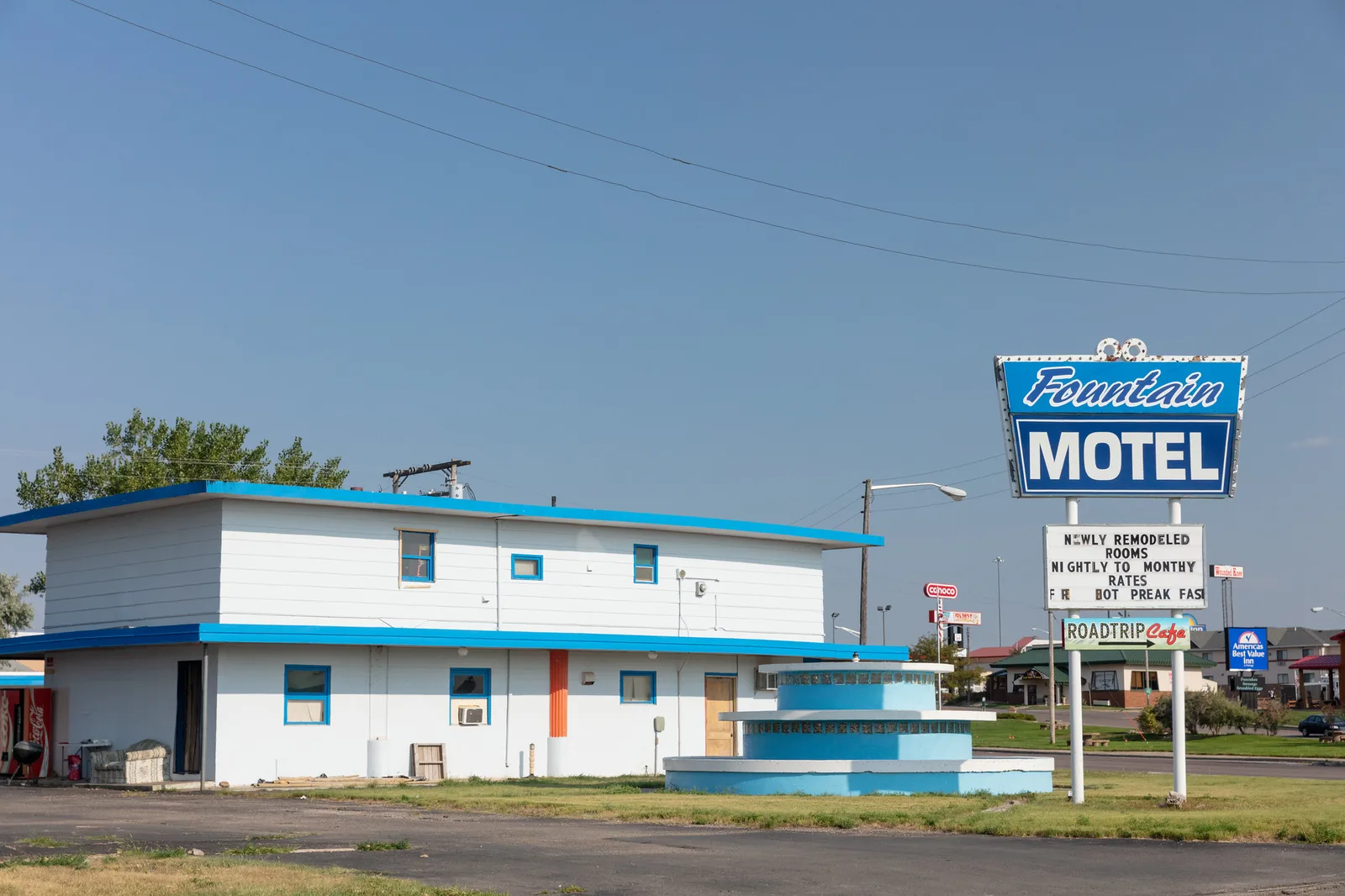
The sign is often the star of a motel picture. Classic motel signs are tall, colorful and full of personality, with arrows, stars, palm trees and script lettering.
- Against the sky. A tall sign against a plain blue sky, a sunset or storm clouds makes a striking picture.
- With the building. Step back to show the sign and the motel together for context.
- Close details. Fill the frame with a single letter, an arrow or a row of bulbs.
- Vacancy signs. Small glowing signs offering rooms add a touch of story.
Low angles make signs look taller and more dramatic. Keep the sign straight, and leave space around it so it does not feel cramped. Faded and broken signs carry their own beauty and a sense of time passing. Missing letters, rusted frames and birds perched on the top can be more interesting than a perfect sign. The guide to sign photography has more ideas for signs of every kind.
Motels at dusk
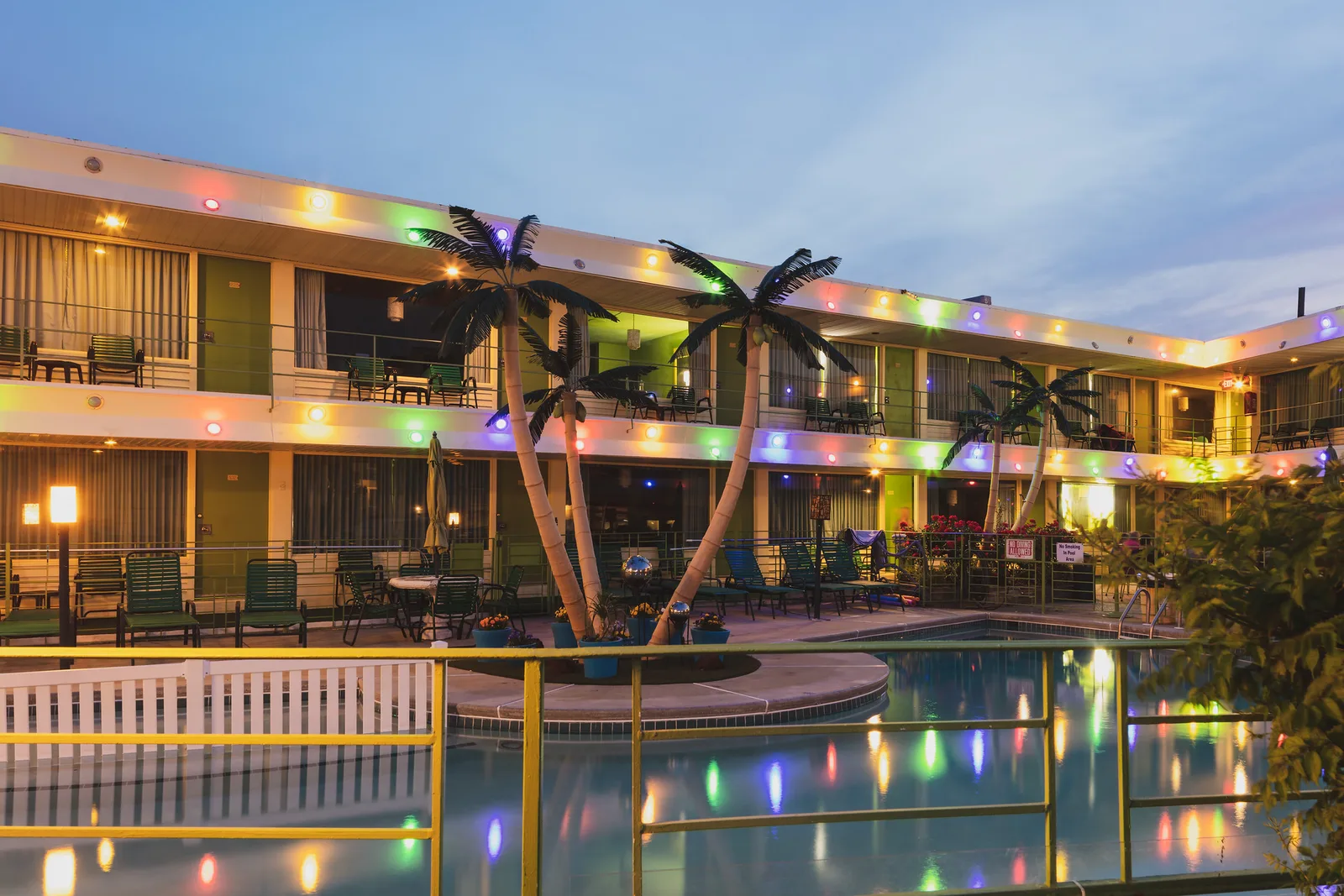
Dusk is the magic hour for motels. As the sky turns deep blue, the sign lights up, room windows glow and walkway lights switch on.
- Arrive early. Set up before sunset, and photograph through blue hour as the lights come on.
- Balance the light. The best moment is when the sky is still blue, but the lights are bright.
- Use a tripod. A steady camera allows long exposures with clean detail.
- Look for warm windows. A single lit room window in a dark row tells a quiet story.
Motels at dusk often look like scenes from a film, with color and mood that feel cinematic. The guide to blue hour photography explains how to make the most of this short window of light.
Want to make glowing signs shine? The guide to neon sign photography covers exposure and color for lit signs.
Motels at night
After full dark, motels take on a different, lonelier mood. A glowing sign over an empty parking lot, a single car under a light and the soft glow of a vending machine in a stairwell all feel quiet and mysterious. Use a tripod, a low ISO and long exposures to keep shadows clean. Rain makes night scenes even richer, with reflections of the sign in puddles on the pavement. The guide to night photography covers the basics of working after dark.
Doors, balconies and walkways
Motels are built in rows, which makes them full of pattern and repetition.
- Rows of doors. Shoot along a row of doors so they repeat into the distance.
- Straight on. Photograph a single colorful door with its room number, centered and square.
- Balconies. Upper walkways with railings and lights make strong leading lines.
- Stairs. Metal stairs between floors add diagonal lines and shadows.
- Chairs. A plastic chair outside a room door is a classic, quiet detail.
Use symmetry for formal, balanced pictures, or diagonals for dynamic ones. Doors painted in bright colors against pale walls make cheerful, graphic frames. Morning and late afternoon light, falling across the row from the side, adds shadows that give the walkway depth and rhythm.
Cars at the motel
Cars and motels belong together. Classic motels were built for drivers, with parking right outside each door. A vintage car parked in front of a pastel room, a dusty road trip car with luggage on the roof or a single pickup under a glowing sign all strengthen the sense of travel. Choose a car that suits the mood, and position yourself so it leads the eye toward the sign or the doors. If a car belongs to another guest, keep the plate out of view or unreadable, and never touch or lean on it.
Pools and courtyards
Many classic motels have a pool in the courtyard, surrounded by lounge chairs, umbrellas and palm trees. These scenes are bright, playful and full of color.
- Empty pools. A pool with no one in it, still and blue, has a calm, slightly surreal feel.
- Reflections. At dusk, a still pool reflects the lights and sign of the motel.
- From above. An upper balcony gives a view down onto the pool and chairs.
- Details. Ladders, diving boards, umbrellas and tiles make simple, colorful pictures.
Always respect guests. Avoid photographing people in swimwear, and photograph pools when they are empty or keep people out of the frame. Ask staff before photographing the property. Early morning, before guests come out, is often the quietest time for pool pictures, with still water and soft light.
Motel rooms
Motel rooms have a look all their own: patterned bedspreads, wood paneling, a small television, a lamp on the nightstand and a window with heavy curtains. When you stay at a motel, the room itself becomes a subject.
- Use window light. Open the curtains for soft daylight, or use the lamps for warm evening light.
- Find details. Room keys, paintings, carpet patterns and old phones show character.
- Look out. A view from the room door onto the parking lot or sign tells where you are.
- Keep it tidy. Move bags and clutter out of the frame for a clean scene.
Shoot from a corner with a wide lens to show the whole room, and keep verticals straight. Turning on every lamp gives a warm, even glow that balances the light from the window. Rooms in the morning, with light slipping through the curtains, can feel especially quiet and personal. A cup of coffee on the nightstand, a map spread on the bed or a suitcase by the door adds a sense of someone passing through.
Curious about photographing rooms? The guide to interior photography covers light, angles and lenses for indoor spaces.
Abandoned motels
Along old highways, many motels have closed and been left to fade. Peeling paint, broken signs, boarded windows and weeds in the parking lot tell stories of roads that have changed.
- Show the setting. Include the empty road and surroundings to show isolation.
- Find the sign. A faded, broken sign is often the most powerful element.
- Look for details. Room numbers, rusted railings and peeling doors add texture.
- Use soft light. Overcast skies give a quiet, wistful mood.
Photograph from public places, and never enter closed buildings or private land without permission. Abandoned buildings can be dangerous, with broken floors, glass and hazardous materials. The guide to urban exploration photography covers how to approach these places safely and respectfully.
Motels through the seasons
The same motel can feel completely different from season to season. In summer, bright sun, blue skies and a busy pool give a cheerful holiday mood. In autumn, fallen leaves gather by the doors and the light turns golden. In winter, snow on the roofs and a sign glowing through falling flakes make a cozy, lonely scene. In spring, storms roll across open country behind the sign. A motel you pass often is worth photographing in every season.
Motels in the landscape
A motel in a big landscape shows the scale of the road and the land. A small motel under a vast desert sky, a row of cabins at the foot of mountains or a motel at the edge of a small prairie town all show how these stops sit in the land.
- Go wide. Include plenty of sky and land around the motel.
- Use the road. Let the highway lead toward the motel.
- Use weather. Storms and dramatic skies add mood.
- Use a longer lens. Compress the motel against distant mountains.
These wider pictures make wonderful openers for a set, giving context before the closer views of signs, doors and rooms. Motels on the edge of a small town are especially rewarding, since the main street, the water tower and the grain elevator often sit in the same view.
Telling a road trip story
Motels are natural chapters in the story of a road trip. Each night, a different motel, sign and room becomes part of the journey.
- Photograph every motel. Take the same picture at each one, such as the sign at dusk, for a consistent series.
- Add details. Room keys, receipts, maps and the view from the door.
- Include companions. Friends unloading the car or relaxing by the pool add warmth.
- Mix with the road. Combine motels with gas stations, diners and empty highways.
Planning a long drive? The guide to road trip photography covers how to tell the story of a journey.
Etiquette and safety
- Ask permission. Motels are private businesses. Ask staff before photographing the property, especially if you are not a guest.
- Respect guests. Never photograph people in rooms, at the pool or in the parking lot without permission. Avoid showing room numbers with people.
- Avoid license plates. Keep plates of parked cars out of view or unreadable.
- Stay safe at night. Be aware of your surroundings, keep valuables secure and park in well lit areas when you work after dark.
- Do not trespass. At abandoned motels, stay on public land.
Settings for motel photography
- Dusk, tripod. Use ISO 100 to 400, f/8 and exposures of one to several seconds.
- Night, handheld. Raise the ISO, open the aperture and keep the shutter at 1/60 or faster.
- Daytime. Use f/8 and a low ISO for sharp, colorful scenes.
- Signs. Expose for the brightest lights so they keep their color, using exposure compensation if needed.
- White balance. Mixed lights can clash. Choose a setting that keeps the mood you want.
Using a phone
A phone works well for motels. Use night mode for glowing signs, the wide lens for rooms and portrait mode for small details. Tap to set exposure on the brightest part of the sign, and hold steady against a railing or car roof.
Editing motel photos
Motel pictures often suit a slightly nostalgic edit. Warm the tones a little, soften contrast and add a gentle fade for a vintage feel. For dusk scenes, deepen the blue of the sky and keep the warm glow of the lights. Straighten verticals, and crop for strong lines. The guide to cinematic photography has ideas for moody, film inspired color, and the guide to color in photography explains how warm and cool colors work together.
Common mistakes
- Missing blue hour. Once the sky goes black, the motel loses its setting.
- Blown out signs. Bright lights lose color. Darken the exposure.
- Cluttered parking lots. Cars and bins clutter the scene. Find an angle that simplifies.
- Leaning verticals. Keep the camera level so buildings and signs stand straight.
- Ignoring privacy. Keep guests, plates and room numbers out of the frame.
- Trespassing at abandoned sites. Stay on public land.
Try this: a 10-minute motel set
On your next road trip, take five pictures at the motel where you stay.
- The sign at dusk, against the blue sky.
- A row of doors or a walkway.
- A single detail, such as a room number or a chair.
- The room, from a corner, in window light.
- The view from your door.
Together, these five pictures tell the story of one night on the road. Keep them simple, and let the light and the small details do the work, rather than trying to show everything in a single frame. Repeat the set at each motel, and you will build a lovely series by the end of the trip. Lay the pictures out in a grid by night, and the differences between each stop become part of the story.
Frequently asked questions
When is the best time to photograph a motel?
Blue hour, just after sunset, when the sign and windows glow but the sky still has color.
Can I photograph a motel if I am not a guest?
From a public sidewalk, generally yes. Ask permission before photographing on the property.
How do I photograph a glowing motel sign?
Expose for the brightest lights, use a tripod at dusk and keep the sky deep blue.
How do I photograph a motel room?
Shoot from a corner with a wide lens, use window light or lamps and keep verticals straight.
How do I make motel pictures look vintage?
Warm the colors, soften contrast, add a gentle fade and look for classic signs, cars and details.
What lens is best for motel photography?
A wide or standard lens suits signs, buildings and rooms, and a short telephoto suits details and compressed rows of doors.
For terms such as blue hour, symmetry, white balance and exposure compensation, see the photography glossary.