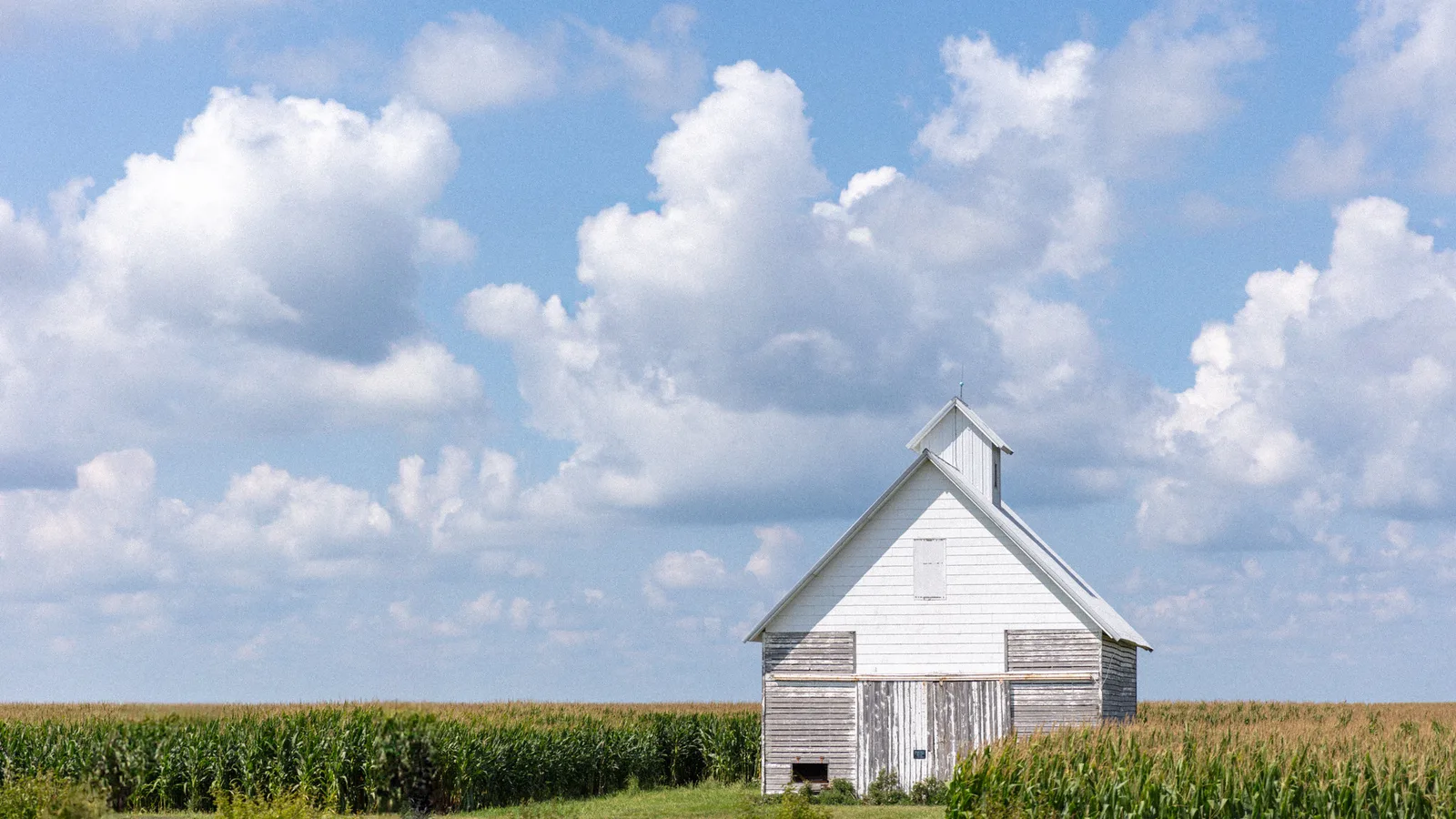
Few subjects feel as timeless as a barn standing alone in a field. Red barns with white trim, gray barns worn silver by weather, round barns, stone barns and tiny sheds leaning into the wind all tell stories about the land and the people who worked it. Barn photography rewards patience, good light and a love of quiet places, and it is a wonderful subject for beginners because barns stand still, appear in every season and look beautiful in almost any weather.
This guide covers why barns make great subjects, finding them, choosing angles, light and weather, the four seasons, color, texture, details, interiors, barns in the wider landscape, settings, phones, editing, common mistakes and a short practice exercise. It pairs well with the guide to farm and countryside photography.
Why barns make great subjects
A barn is simple in shape, strong in color and full of history. That combination makes it easy to compose and rewarding to study.
- Bold shapes. Gabled roofs, gambrel roofs and round silos read clearly even from far away.
- Strong color. Classic barn red stands out against green fields, golden crops, white snow and blue sky.
- Texture. Weathered boards, rusty tin roofs and peeling paint reward close study.
- Story. Every barn hints at generations of farming, harvests and hard work.
- Patience. A barn will wait all day for the light to improve.
Barns also change slowly over the years, which makes them perfect for a long term project. Photographing the same barn as it ages, gets repainted or slowly returns to the earth becomes a quiet record of time passing.
Barn styles to look for
Barns come in many shapes, and learning to recognize them makes every drive more interesting. Gambrel barns have the classic two slope roof that looks like a folded hat. Gable barns have a simple triangle roof. Round and many sided barns are rare and always worth a stop. Bank barns are built into a hillside so wagons can drive straight into the upper floor. Stone barns, log barns and long tobacco barns each belong to their own region. Small outbuildings such as corn cribs, milk houses, sheds and windmills make charming companions in the frame. Each style suggests a slightly different picture, from a bold symmetrical front to a long, low side view.
Finding barns to photograph
Barns are scattered across farm country, and the best ones are often found by simply driving slowly along back roads.
- Take the small roads. County roads and gravel lanes pass far more barns than highways do.
- Look for heritage farms. Historic farms, farm museums and agricultural fairs often preserve old barns.
- Ask locals. People in small towns usually know the most photogenic barn for miles around.
- Use maps. Satellite views show isolated buildings in open fields, which often make the cleanest pictures.
- Keep a list. Note each barn, which way it faces and when the light should be best.
Most barns sit on private land. Photograph from the road or a public shoulder, park safely and well off the pavement, and always ask permission before stepping onto a farm. Farmers are often happy to say yes when asked politely.
Choosing your angle
Walk or drive around the barn before setting up, and look at it from every available side.
- Front on. Facing the main doors straight on gives a symmetrical, formal portrait of the barn.
- Corner view. Standing at an angle shows the front and one side, which adds depth and shows the roof shape.
- Low angle. Crouching makes the barn loom against the sky and lets grass or flowers fill the foreground.
- From far away. A distant view makes the barn small in a sea of fields, clouds or snow.
- From a rise. A nearby hill or bank shows the barn in its pattern of fields and fences.
Keep the walls straight. Hold the camera level rather than tilting it up, and step back or crop later if the roof is cut off. Leaning walls make a sturdy barn look like it is about to fall over.
Light and weather
Light makes the biggest difference in barn photography.
- Golden hour. Low, warm light makes red paint glow and rakes across boards to show every grain. See the guide to golden hour photography.
- Side light. Light from one side gives the barn shape, with one wall bright and one in shadow.
- Overcast days. Soft light shows color and texture evenly and suits close details.
- Storms. A dark sky behind a sunlit barn is one of the most dramatic scenes in the countryside.
- Fog. Mist simplifies the background and wraps the barn in quiet mood.
Notice which way the barn faces. An east facing barn is lit in the morning and a west facing barn in the evening. A compass app or a quick look at the sun on your first visit tells you when to return.
Barns after dark
Night opens a whole different chapter. Far from city lights, a barn makes a perfect foreground for a starry sky or the Milky Way. Set the camera on a tripod, use a wide lens at its widest aperture and try exposures of around fifteen to twenty five seconds at a high ISO. A single yard light on a pole often casts a warm glow across the barn that balances beautifully with the deep blue sky. You can also gently light the barn with a dim flashlight swept across the boards during a long exposure. Scout the barn in daylight first, so you know where to stand and where the ground is safe.
Barns through the seasons
A single barn can make four very different pictures in a year.
- Spring. Fresh green fields, blossoming trees and wildflowers bring a cheerful, gentle mood.
- Summer. Tall crops, hay bales and puffy clouds create classic farm scenes.
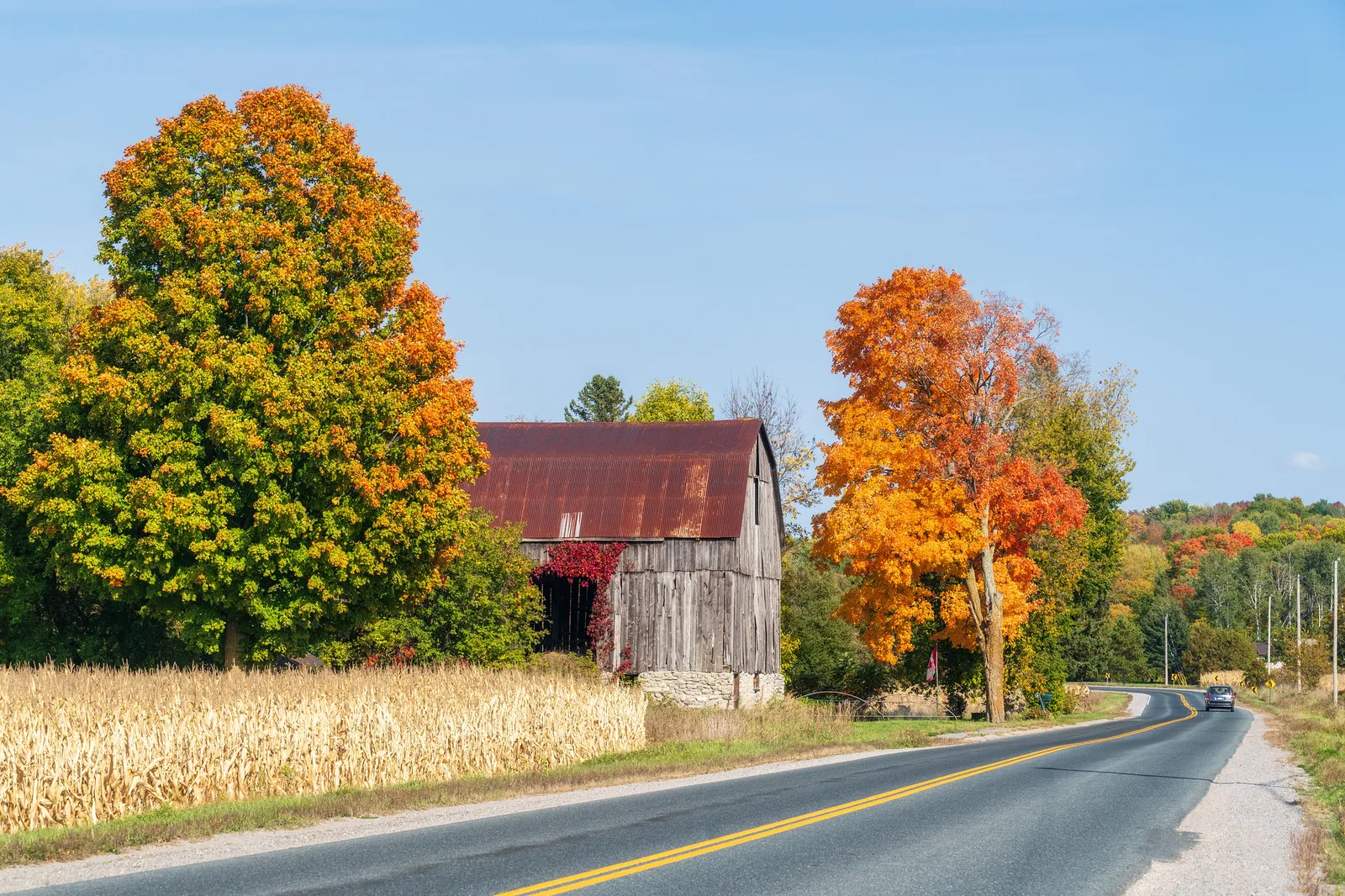
- Autumn. Golden fields and blazing leaves frame the barn with warm color. See the guide to fall photography.
- Winter. A red barn in white snow is simple, graphic and striking. See the winter photography guide.
Returning to one favorite barn every season makes a lovely series, and it teaches you how much light and color change the same scene.
Color
Color is one of the joys of barn photography.
- Red and green. The classic pairing of a red barn and green fields feels bold and fresh.
- Red and white. Snow, white trim and white clouds make red barns pop.
- Red and blue. A clear blue sky behind a red barn gives a strong, cheerful contrast.
- Soft grays. Unpainted barns weather to silver and brown, which suits calm, muted scenes.
- Painted details. Painted quilt squares, stars and signs add a splash of folk art.
Keep color natural. Warm reds are easy to oversaturate in editing, so check that the barn still looks like real painted wood. The guide to color in photography explains how colors work together.
Texture and age
Old barns are full of texture, and side light brings it out.
- Weathered boards. Gray, split and knotted wood shows years of sun and rain.
- Tin roofs. Rusty, patched metal roofs make warm patterns of orange and brown. See the guide to rust photography.
- Peeling paint. Flaking layers of old color reveal the barn’s history.
- Stone foundations. Old fieldstone walls show the hand work of early builders.
- Leaning barns. A barn slowly sagging into the grass has a gentle, poignant beauty.
Black and white suits weathered barns beautifully, since it lets texture and tone take over. Photograph old barns from a safe distance, and never climb on or enter a barn that looks unstable.
Details
Move closer, and a barn offers many smaller pictures.
- Doors. Big sliding doors, X braced doors and hayloft doors make strong graphic frames. See the guide to door photography.
- Windows. Small square windows, broken panes and cobwebs suggest quiet stories.
- Hardware. Hinges, latches, rails and pulleys show old craft.
- Weather vanes. Roosters, horses and arrows on the roof make fun silhouettes.
- Signs. Painted farm names and dates add character, so long as they belong to the barn.
A longer lens helps reach details high on a wall, such as a hayloft door or a cupola. A set of detail pictures beside one wide view makes a complete portrait of a barn.
Telling the barn’s story
Ask what makes this barn different from the last one you saw. Perhaps it is the last building standing on an empty farm, or a freshly painted barn on a busy dairy, or a tiny shed with a hand painted sign. Let that idea guide your choices. A sagging barn under a gray sky tells a story of change. A bright barn beside green fields and grazing horses tells a story of a working farm. Choosing light, weather and framing that match the story turns a pleasant picture into a memorable one.
Inside the barn
With permission, the inside of a barn can be magical.
- Light through gaps. Sunbeams through cracks in the boards create glowing stripes, especially on dusty days.
- Doorway light. Shooting from inside toward an open door frames the bright landscape in a dark surround.
- Beams and rafters. Old timber frames make strong lines and patterns overhead.
- Hay and tools. Bales, ladders and old tools add a sense of working life.
Interiors are dim, so raise the ISO or rest the camera on something steady. Expose for the bright areas so sunbeams and doorways do not turn pure white. Always ask first and watch your step on old floors.
Barns in the landscape
Some of the most memorable barn pictures show the barn small in a big scene.
- Big sky. Place the barn low in the frame and let clouds fill the space above.
- Leading lines. Fences, tire tracks, crop rows and country roads guide the eye toward the barn. See the guide to fence photography.
- Foreground. Wildflowers, hay bales or a weathered post add depth.
- Isolation. A lone barn in an empty field feels calm and timeless.
- Compression. A long lens from far away stacks the barn against hills or mountains.
Use the rule of thirds as a starting point, placing the barn off center and the horizon on a third line. A tiny barn in a vast landscape can say more about rural life than a close portrait.
Want to show the barn in its wider world? The guide to prairie photography covers open land, big skies and wide horizons.
Farm life around the barn
Barns are part of a working world, and the life around them adds warmth to your pictures.
- Animals. Horses at the paddock fence, cows heading in for the evening or chickens by the door bring a barn to life. See the guide to farm animal photography.
- Machinery. An old tractor parked beside the barn suggests the rhythm of the seasons.
- Harvest. Hay bales, stacked wood and full corn cribs show the barn doing its job.
- People at work. With permission, a farmer opening the big doors adds scale and story.
These small moments turn a picture of a building into a picture of a place.
Settings and lenses
- Aperture. Use f/8 to f/11 for front to back sharpness in landscape views.
- Shutter speed. Hand held views are easy in daylight. Use a tripod at dawn, dusk and indoors.
- ISO. Keep it low outdoors and raise it inside dim barns.
- Wide lens. Good for interiors and close views with dramatic skies.
- Standard lens. Natural looking portraits of the whole barn.
- Telephoto lens. Distant barns, compressed scenes and high details.
Using a phone
A phone is perfect for barns spotted on a drive. Turn on the grid, hold the phone level so the walls stay straight and tap on the sky to stop it from turning white. The ultra wide lens works well inside barns, and portrait orientation suits tall barns with a silo.
Editing barn photos
Straighten the horizon and walls first. Lower highlights to bring back detail in bright skies and white trim, and lift shadows gently on the shaded side. Add a little texture or clarity to bring out weathered wood. Keep reds rich but believable, and try a black and white version of older, weathered barns.
Common mistakes
- Leaning walls. Keep the camera level and correct verticals in editing.
- Flat midday light. Return in the morning or evening for warmer, more shapely light.
- Cluttered foregrounds. Power lines, cars and trash bins distract. Change position to hide them.
- Trespassing. Stay on public land unless you have permission.
- Oversaturated reds. Keep color natural so the barn looks real.
- Always shooting the same view. Try details, interiors and distant landscapes too.
Try this: a 10-minute barn study
Find one barn you can safely photograph from a public road, and spend ten minutes on it.
- Make one straight on portrait, perfectly level.
- Make one corner view that shows the roof shape.
- Step back for a wide view with the barn small in the landscape.
- Use a longer zoom for a door, window or roof detail.
- Crouch low for a view with grass or flowers in the foreground.
Compare the five, then return in a different season or light and repeat the exercise.
Love the textures of old farm buildings? The guide to texture in photography shows how light reveals surfaces.
Frequently asked questions
When is the best time to photograph barns?
Early morning and late afternoon, when warm, low light makes red paint glow and shows texture.
Can I photograph a barn on private land?
You can usually photograph from a public road. Ask permission before entering any farm.
What lens is best for barn photography?
A standard zoom covers most barns, with a telephoto for distant barns and details.
Should barn photos be in color or black and white?
Color suits red barns and seasonal scenes. Black and white suits weathered barns and stormy skies.
How do I photograph a red barn without the color looking fake?
Expose carefully so the red does not clip, shoot in warm, low light and keep saturation modest when editing.
How can I make a barn photo look less like a snapshot?
Choose a clear angle, wait for good light, simplify the foreground and include a strong sky or season.
Curious about the small towns near farm country? The guide to small town photography covers main streets and local life.
For terms such as golden hour, leading lines and compression, see the photography glossary.