Sunsets are one of the most photographed subjects in the world, and for good reason. The combination of warm colors, dramatic skies, and changing light creates scenes that are naturally compelling. But capturing a sunset that matches what your eyes see (or exceeds it) takes more than pointing your camera at the horizon. The right settings, timing, and composition transform a generic sunset snapshot into a memorable photograph.
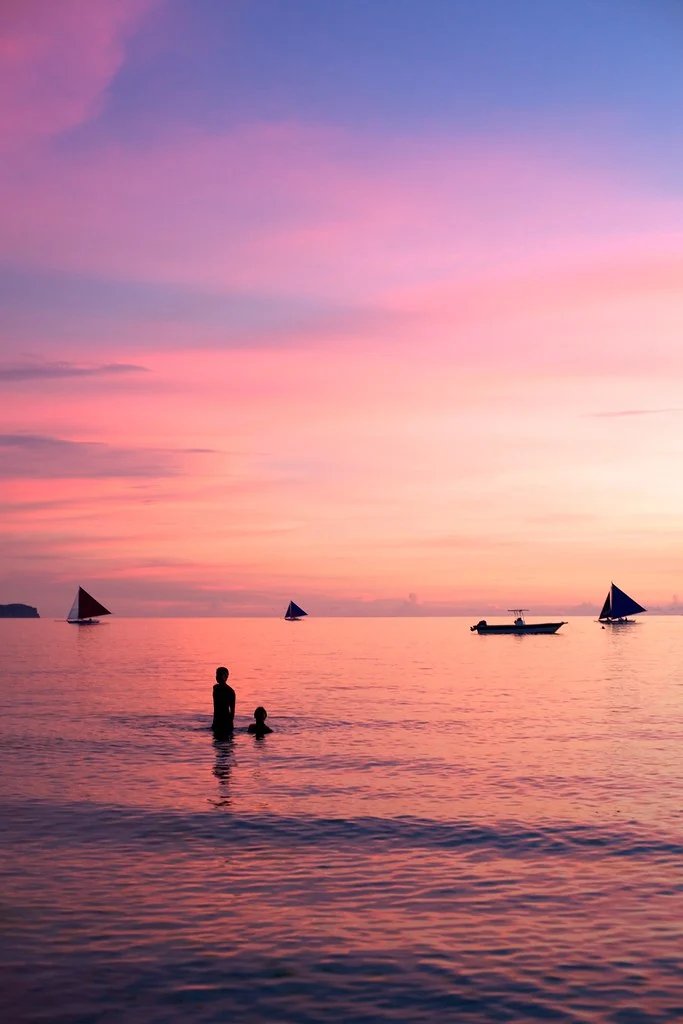
This guide covers the camera settings and composition strategies that consistently produce strong sunset images. If you already have the basics from our how to photograph sunsets guide, these additional tips will help you push your sunset photography further.
Camera Settings for Sunsets
Exposure
Sunsets present a high dynamic range scene: the area around the sun is extremely bright while the foreground and opposite sky are much darker. Your camera’s meter will often get confused, resulting in either a washed-out sky or a silhouetted foreground.
For the richest sky colors, slightly underexpose. Use spot metering or center-weighted metering aimed at the brightest part of the sky (but not directly at the sun). This preserves color saturation in the sky. You can always lift shadows in post-processing, but overexposed, blown-out skies cannot be recovered.
Use exposure compensation of -1/3 to -1 stop as a starting point when shooting in Aperture Priority. Check your histogram after each shot: you want the highlights pushed to the right but not clipping.
Recommended Settings
- Mode: Aperture Priority or Manual
- Aperture: f/8 to f/16 for landscapes (sharp across the frame with starburst effects at f/16). f/2.8 to f/5.6 if you want bokeh with a foreground subject.
- ISO: 100 to 400 (on a tripod, keep it at 100)
- White balance: Daylight or Cloudy. Cloudy warms the tones slightly. Avoid Auto, which may cool down the warm colors you want to capture.
- File format: RAW. The dynamic range and color adjustment latitude in RAW files is essential for sunset processing.
Bracketing for HDR
When the dynamic range exceeds what a single exposure can capture (bright sun plus dark foreground), shoot a bracketed series: one exposure for the sky, one for the midtones, and one for the foreground shadows. Merge them in Lightroom, Photoshop, or dedicated HDR software. This technique lets you retain color in the sky while showing detail in the foreground.
Composition Strategies
Include Foreground Interest
The most common mistake in sunset photography is composing with nothing but sky and horizon. While the sky is the star of the show, a strong foreground gives the viewer an entry point into the image and adds depth. Rocks, driftwood, flowers, a pier, a fence, a winding path, or water all work as foreground anchors.
Get low. Lowering your camera position exaggerates the foreground and makes nearby objects more prominent in the frame. A flower at knee height with a sunset behind it can be more compelling than the sunset alone.
Use Reflections
Water is a sunset photographer’s best ally. Oceans, lakes, rivers, puddles, and wet sand all reflect the sky colors, doubling the impact. Calm water produces mirror reflections; rippled water creates broken, abstract reflections with interesting textures. Both are effective.
Silhouettes
Silhouettes simplify the image to shape and color. Trees, people, buildings, and animals all make strong silhouettes against a sunset sky. Expose for the sky (meter off the bright area) and let the foreground go dark. The subject should have a recognizable, interesting outline. A person with arms raised reads better as a silhouette than a person standing straight.
Leading Lines
Roads, boardwalks, fences, rivers, and shorelines that point toward the sun create strong compositions. Leading lines guide the viewer’s eye from the foreground into the sunset, creating depth and narrative in the image.
Look Behind You
While everyone faces the sunset, the light it throws on the landscape behind you can be equally beautiful. Warm, low-angle light illuminates buildings, mountains, and fields with a warm glow. Some of the best sunset-period images face away from the sun.
Timing: Before, During, and After
The most vibrant colors often appear 10 to 20 minutes after the sun drops below the horizon. Many photographers pack up too early and miss the best light. Stay at least 30 minutes past sunset. The sky can explode with deep reds, purples, and magentas well after the sun disappears.
The transition from sunset into blue hour is also worth capturing. As the warm tones fade and cool blue tones take over, the mood shifts dramatically. Staying through this entire window gives you a diverse set of images from a single outing.
Clouds are the secret ingredient. A completely clear sky produces a simple gradient from warm to cool. Clouds catch and scatter the light, creating texture, drama, and unpredictable color patterns. Partly cloudy skies often produce the most spectacular sunsets.
Lens Choice
There is no single “best” lens for sunsets:
- Wide-angle (14mm to 35mm): Captures the full sky plus foreground. Best for landscapes and seascapes where the sky and foreground together tell the story.
- Standard (35mm to 70mm): A versatile range for balanced compositions. Good for including just enough context around the sunset.
- Telephoto (70mm to 200mm+): Compresses the scene and makes the sun appear larger relative to foreground subjects. Excellent for silhouettes and for isolating dramatic sections of the sky.
Bring multiple focal lengths if you can. A wide shot and a telephoto shot of the same sunset will look like completely different scenes.
Post-Processing Sunset Photos
RAW files from sunset shoots often look flat and underwhelming on the camera LCD or when first imported. This is normal. RAW files capture the data; your editing brings out the colors and drama your eyes saw.
Key adjustments:
- White balance: Shift warmer if the colors look too neutral. Try the Cloudy or Shade preset as a starting point.
- Vibrance and saturation: Increase vibrance (it targets less-saturated colors) rather than saturation (which affects all colors equally and can look overdone). A light touch goes a long way.
- Graduated filter: Darken the sky and brighten the foreground with a graduated filter to balance the exposure. This mimics a physical graduated ND filter.
- Clarity and dehaze: A small amount of dehaze can intensify sky colors and add definition to clouds. Too much creates an unnatural, crunchy look.
- HSL panel: Fine-tune specific colors. Shift the orange and red hues, increase their saturation slightly, or adjust their luminance for richer sunset tones.
The goal is to enhance what was already there, not to create colors that were not present. Over-processed sunsets with neon-bright skies are a common pitfall. When in doubt, pull back on the adjustments. A natural-looking sunset with rich, believable colors is more impressive than one that has been pushed past the point of realism.
Common Mistakes
- Leaving too early: The best colors often appear after the sun sets. Stay for at least 30 minutes past sunset.
- No foreground interest: Pure sky-and-horizon images are forgettable. Find something to anchor the composition.
- Over-saturation in editing: Pushing vibrance and saturation too far makes colors look unnatural. Aim for “rich but believable.”
- Centering the horizon: Placing the horizon in the middle of the frame often creates a static, unbalanced composition. Place it in the lower third if the sky is dramatic, or the upper third if the foreground is more interesting.
- Shooting at the widest aperture: Unless you want shallow depth of field for a specific reason, use f/8 to f/11 for sharpness across the frame.
Sunset photography is accessible to every photographer, from beginners with smartphones to professionals with medium format cameras. The techniques that separate great sunset images from average ones are not about gear but about timing, composition, and the discipline to stay and keep shooting through the entire light show.