Sunsets are one of the most photographed subjects on the planet, yet sunset images that hold up are surprisingly rare. The difference between a forgettable snapshot and a good sunset photo comes down to understanding exposure, choosing the right composition, and knowing how to work with rapidly changing light. This guide covers the camera settings, techniques, and creative decisions that will help you capture sunsets that do justice to what you saw in person.
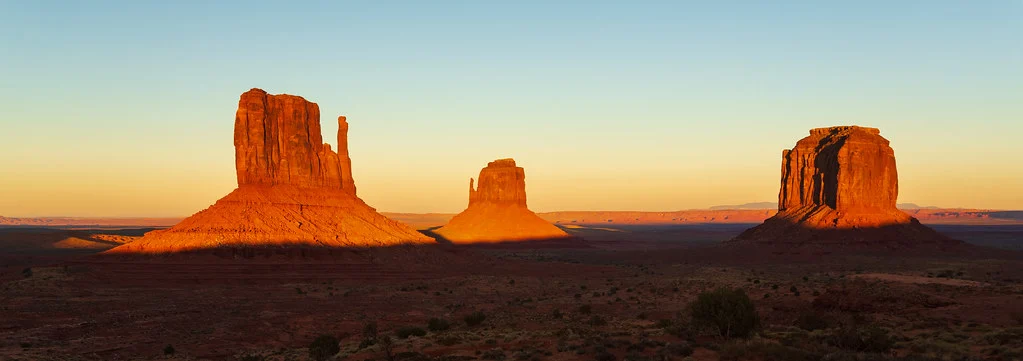
Why Sunsets Are Harder Than They Look
The human eye can see a far greater range of light and dark than any camera sensor. When you watch a sunset, your eyes adjust constantly, letting you see detail in both the brilliant sky and the shadowed landscape below. Your camera cannot do this in a single frame. The extreme contrast between the bright sky and dark foreground is the central challenge of sunset photography, and every technique in this guide addresses it in some way.
Curious why your eyes cope with a sunset better than your camera? How Does The Human Eye Compare To A Camera starts with dynamic range, where the eye wins, then covers field of view and low-light response.
Camera Settings for Sunsets
Start by switching to aperture priority or full manual mode. Auto mode will often try to brighten the entire scene, washing out the rich colors in the sky that make the sunset worth photographing in the first place.
For aperture, use something in the range of f/8 to f/16. This gives you good sharpness across the frame and enough depth of field to keep both the foreground and sky in focus. If you are including a prominent foreground element very close to the camera, you may need to stop down further or use focus stacking.
Want a close foreground and the sky both sharp? Focus stacking shows how to shoot a stack and merge it in software, for macro and landscapes.
Keep your ISO as low as your camera allows, typically 100 or 200. Sunsets usually provide plenty of light, and a low ISO keeps noise to a minimum and preserves the smooth color gradients that make sunset images sing.
Shutter speed will be determined by your aperture and ISO choices. On a tripod, slow shutter speeds are fine and can even add creative effects like silky water. Handheld, keep your shutter speed fast enough to avoid camera shake.
Expose for the Sky
The single most important exposure decision for sunset photography is to expose for the sky, not the foreground. Point your camera at the brightest part of the sky (not directly at the sun), lock your exposure or note the settings, then recompose your shot. The foreground will go dark, but that is exactly what you want. A properly exposed sky will show rich oranges, pinks, and purples. An overexposed sky turns into a washed-out white blob.
Check your histogram after each shot. The highlights should be pushed to the right side but not clipped. If you see the histogram jammed against the right edge, dial back your exposure slightly. It is much easier to brighten shadows in post-processing than to recover blown-out highlights.
Metering Modes
Your camera’s metering mode significantly affects how it reads the light in a sunset scene. Evaluative or matrix metering tries to balance the entire frame, which often results in an overexposed sky. Spot metering lets you meter off a specific area, giving you precise control. Try spot metering off the brightest part of the sky just above the horizon to get rich, saturated colors.
Center-weighted metering can also work well, especially if you compose with the sky filling most of the frame. Experiment with different metering modes during a single sunset to see which gives you the most consistent results with your camera.
Using Bracketing for High Contrast Scenes
When the contrast between sky and foreground is extreme, a single exposure cannot capture detail in both. Exposure bracketing solves this by taking multiple shots at different exposures that you can blend later.
Set your camera to auto-bracket, typically three to five frames at one or two stop intervals. Use a tripod to ensure the frames align perfectly. In post-processing, you can merge these into a single image that shows detail in both the luminous sky and the shadowed foreground. The key is restraint. Aim for a natural-looking result rather than an overcooked HDR effect with halos and oversaturated colors.
Want to blend the frames by hand? Exposure Blending covers manual blending in Photoshop, luminosity masks, and how it compares with HDR.
Composition: Beyond the Pretty Sky
A gorgeous sky alone does not make a great photograph. The most compelling sunset images include a strong composition that gives the viewer a reason to look beyond the colors.
Include Foreground Interest
An interesting foreground element transforms a sunset from a wallpaper into a photograph. Rocks on a beach, a lone tree, a pier stretching into the water, a winding path, wildflowers, or an interesting silhouette all give the viewer an anchor point and add depth to the image.
Looking for foreground ideas? Foreground Interest in Landscape Photography covers types of foreground elements that work and the settings and techniques that keep them strong.
Get low and close to your foreground element to emphasize it. A wide-angle lens used from a low angle can make a small rock look dramatic while still capturing the vast sky above. The foreground does not need to be perfectly lit. Even a dark silhouette creates a sense of place and scale.
Creating Silhouettes
Silhouettes are a natural fit for sunset photography. When you expose for the bright sky, anything between you and the light source becomes a dark shape. The most effective silhouettes have a clearly recognizable outline: a person, a tree, a building skyline, or an animal.
Make sure your silhouette subject is distinct and does not merge with other elements. A person with arms at their sides can look like a featureless blob. The same person with arms raised or in a dynamic pose creates a far more interesting shape. Separation between elements is key.
Horizon Placement
Where you place the horizon changes the emphasis of the image entirely. A low horizon (one-third from the bottom) gives prominence to a dramatic sky. A high horizon (one-third from the top) emphasizes foreground texture and leading lines. Placing the horizon dead center usually creates a static, uninteresting composition, though it can work when the scene has strong symmetry, such as reflections in still water.
Lens Choice
Wide-angle lenses are the default for sunset photography, and for good reason. They capture the full sweep of the sky and let you include dramatic foreground elements. A focal length in the 16-35mm range (full-frame equivalent) is ideal for grand landscape sunsets.
But do not overlook telephoto lenses. A longer focal length compresses the scene, making the sun appear much larger relative to foreground elements. A telephoto sunset with a distant subject silhouetted against an enormous sun can be far more dramatic than a wide-angle shot of the same scene. Try focal lengths of 100-400mm for this compressed effect.
White Balance for Warm Tones
Auto white balance often tries to neutralize the warm tones that make sunsets beautiful. It sees all that orange light and “corrects” it toward a cooler, more neutral tone. Override this by setting your white balance to cloudy or shade, which adds warmth, or use a manual Kelvin setting around 6000-7000K to enhance the golden and amber tones.
If you shoot in RAW, you can adjust white balance freely in post-processing. But getting it close in-camera helps you evaluate the image on your LCD and make better creative decisions on the spot.
Clouds Make or Break a Sunset
A completely clear sky often produces a disappointing sunset, just a bright ball sinking below the horizon with a narrow band of color. Clouds are what create the drama. They catch and scatter light, creating patterns, textures, and layers of color across the entire sky.
Scattered mid-level clouds are ideal. They provide enough structure to catch color without blocking the sun entirely. High wispy clouds can create dramatic streaks of color, especially after the sun has set. Heavy overcast skies tend to block the light entirely, but gaps in low clouds can create spectacular “God rays” or light shafts.
Check weather and cloud forecasts before heading out. Partly cloudy conditions consistently produce the most photogenic sunsets.
Want to read the sky before you go? How to Photograph Clouds and Skies covers the main cloud types, the light each gives, and exposing for a bright sky.
The Blue Hour: After the Sun Sets
Many photographers pack up as soon as the sun drops below the horizon. This is a mistake. Some of the most beautiful light happens in the 20-40 minutes after sunset, during the transition from golden hour into blue hour.
The sky transitions through deep oranges and purples into rich blues. Contrast drops, colors become more saturated and even, and the light takes on a calm, ethereal quality. If there are city lights, boats, or other artificial light sources in your scene, the blue hour is when they balance perfectly against the natural sky light, creating a blend of warm and cool tones that is impossible to replicate at any other time.
A tripod becomes essential during blue hour as light levels drop. Longer exposures also mean you can capture smooth water, streaking clouds, and other motion effects that add visual interest.
Want more on the minutes after the sun drops? Blue Hour Photography covers when it happens, camera settings, the best subjects and composition tips.
Post-Processing Sunset Photos
Shoot in RAW format for maximum flexibility. RAW files preserve far more color and tonal information than JPEGs, which is especially important for sunsets where subtle gradations of color are the whole point.
In post-processing, start by adjusting exposure and recovering highlights if needed. Use the white balance slider to fine-tune warmth. A slight boost to vibrance (which targets less-saturated colors) often works better than increasing saturation (which can push already-vivid colors into unnatural territory).
Graduated filters are invaluable for sunset post-processing. Apply a graduated filter to darken the sky while leaving the foreground alone, or use one to warm the sky while keeping the foreground neutral. This mimics the effect of physical graduated neutral density filters in the field.
Above all, aim for a result that looks like an enhanced version of reality, not a fantasy. Heavy-handed saturation, unrealistic colors, and overdone HDR processing are the hallmarks of overworked sunset photos. The best sunset images look natural, just a little more vivid and detailed than what the eye could see in the moment.
Timing and Planning
Arrive at your location at least 30 minutes before the predicted sunset time. This gives you time to scout compositions, set up your tripod, and capture the changing light as it evolves. Rushing to set up as the sun is already setting means missing the best moments and making careless mistakes.
Scout locations in advance when possible. A spot that looks promising on a map or satellite image might have obstructions, private property, or unsafe footing that you can only discover by visiting in person. Knowing exactly where to stand and which direction to face lets you focus entirely on the photography when the light gets good.
Sunset photography rewards patience and persistence. Not every sunset will be spectacular, and the best conditions are not always predictable. The photographers who consistently capture strong sunsets are the ones who show up regularly, stay late, and are ready when the sky puts on a show.
Related Guides
- Landscape Photography Guide — Sunsets are one element of the broader landscape discipline
- How to Photograph Stars — Stay after sunset for the stars as twilight fades
- How to Photograph the Northern Lights — Another sky-focused technique at the edges of daylight
- Long Exposure Photography — Smooth clouds and water during sunset golden hour
- Best Camera Settings for Landscapes — Quick settings reference for outdoor shooting